
Body Evolution Massage
Product Designer
Project Overview
As a massage and body-work enthusiast, I understand the importance of self-care and being able to make time for such treatments. My goal for this project was to improve the user experience for a local massage business, where I am a regular patron. I focused on the appointment-booking process because a complicated booking system should not keep users from seeking the self-care they need and deserve.
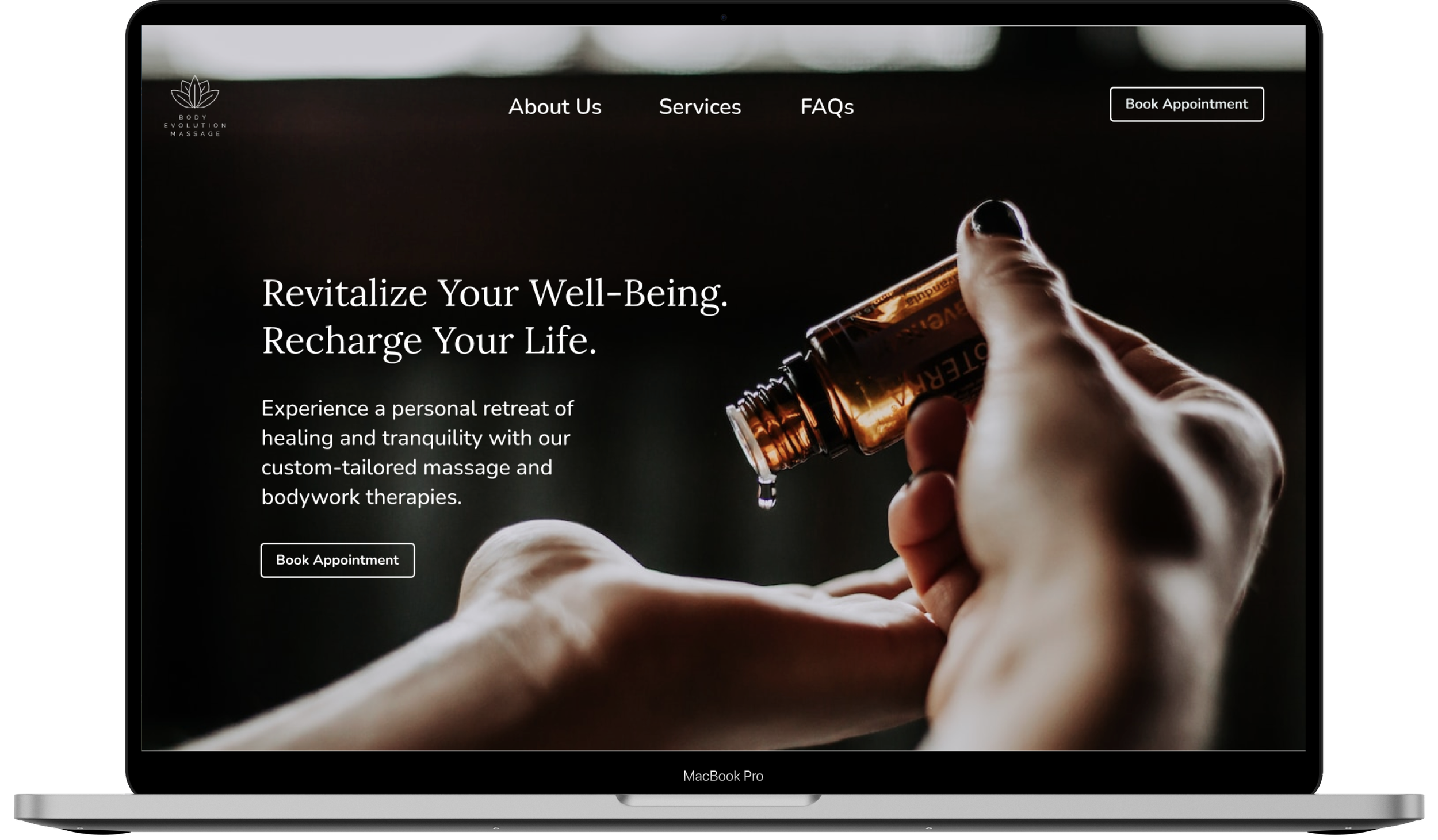
Elevating the experience to encourage exploration
The goals of the redesign were to foster customer engagement, attract new clients, optimize the site for increased traffic and appointment booking, and improve overall user satisfaction within the local community. I accomplished this by understanding the needs of the target audience, enhancing the overall visual appeal, optimizing relevant content, and making the site responsive to mobile.
Original homepage
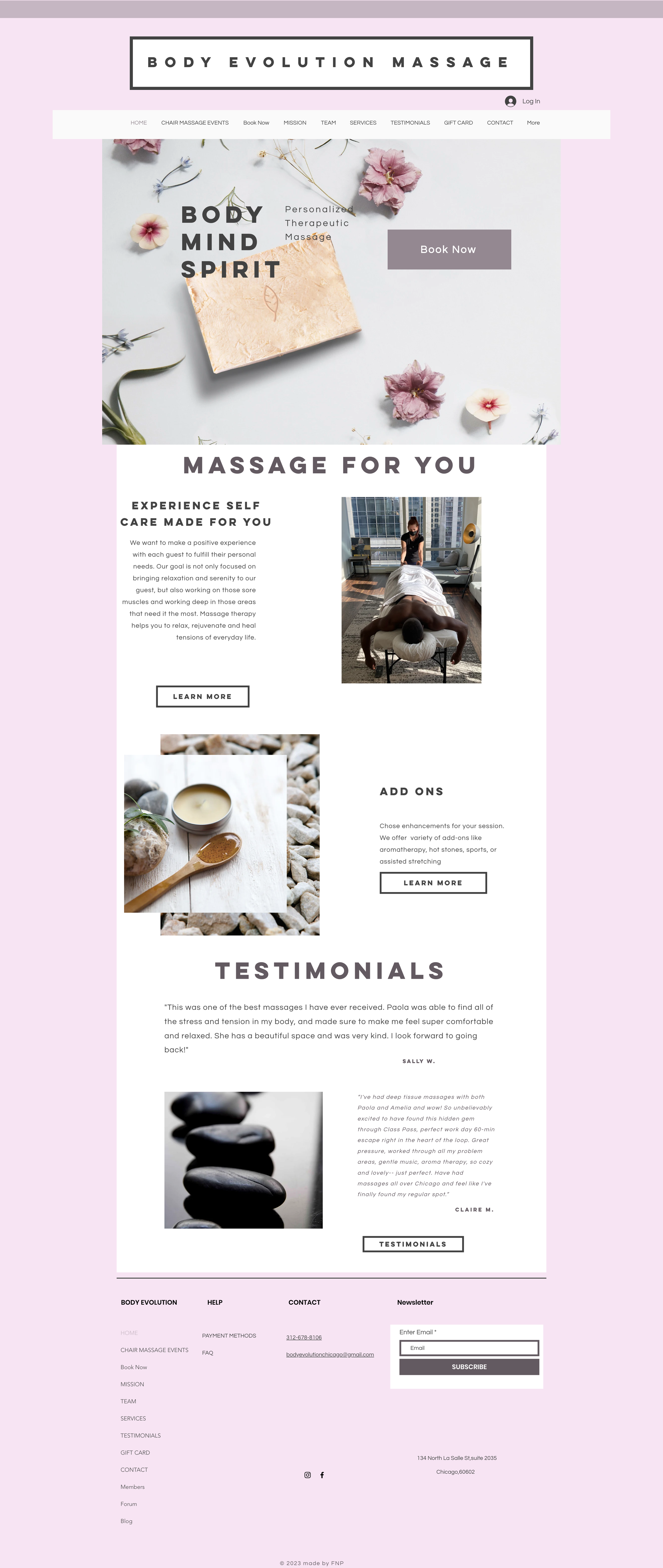
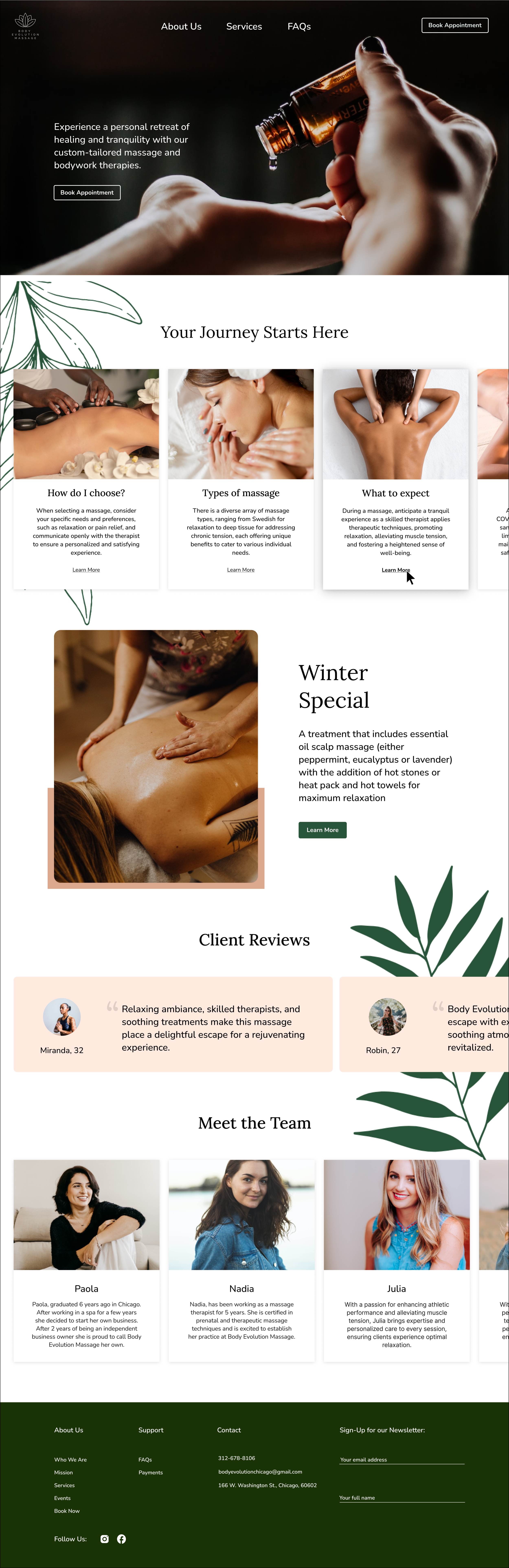
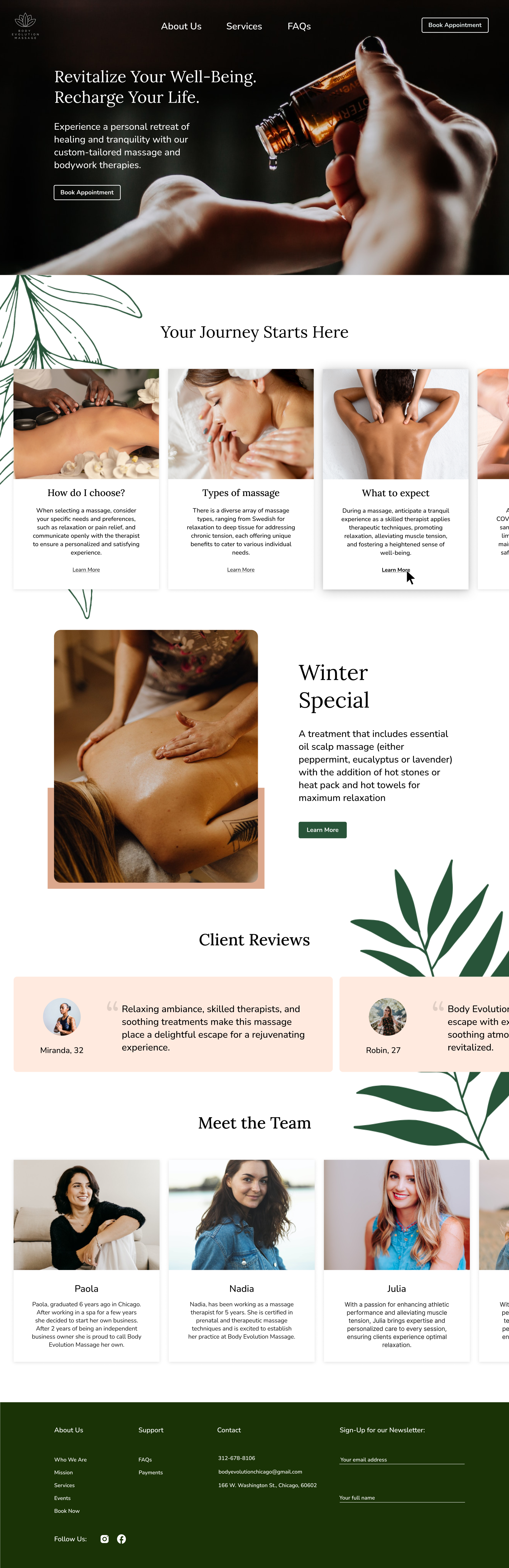
Redesigned homepage for desktop & mobile

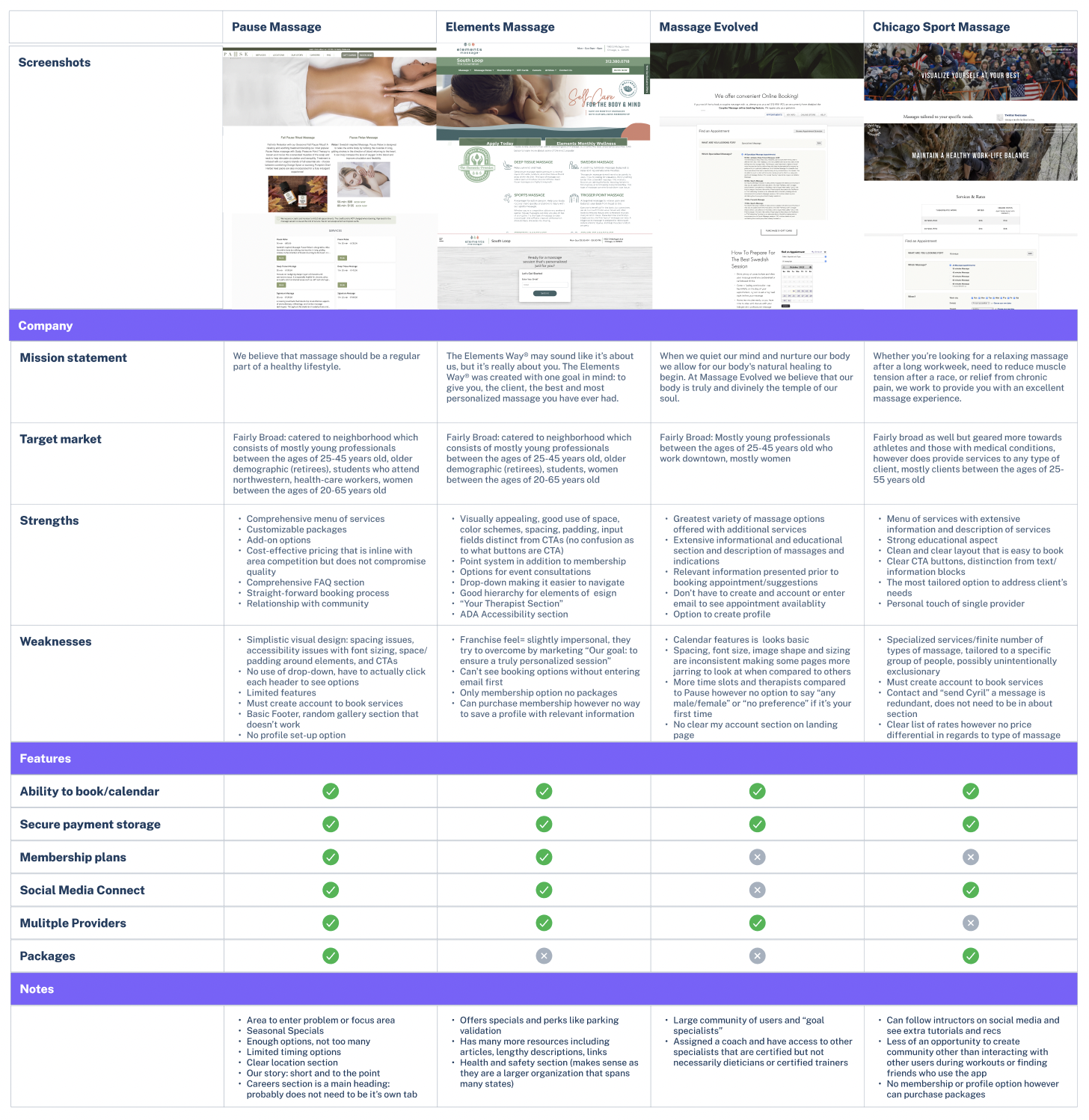
Analyzing local competitors
The first step was to analyze competitors to gain an understanding of existing massage platforms, strengths, weaknesses, and opportunities. I started broadly by examining platforms that offer a wide variety of massage and bodywork services. This helped narrow down critical features and establish a focus.
After the first analysis, I found it beneficial to do a second analysis of local businesses that are comparable to the local business of this project. This data helped form an understanding of the demographics and expectations of the clientele base.
Conducting user interviews of regular spa goers
I interviewed 5 participants, all of whom had varying levels of spa and bodywork experience. The goal was to understand what users require from a platform to improve the booking experience.
Each interview was conducted remotely through video call or in person and lasted about 30-45 minutes.
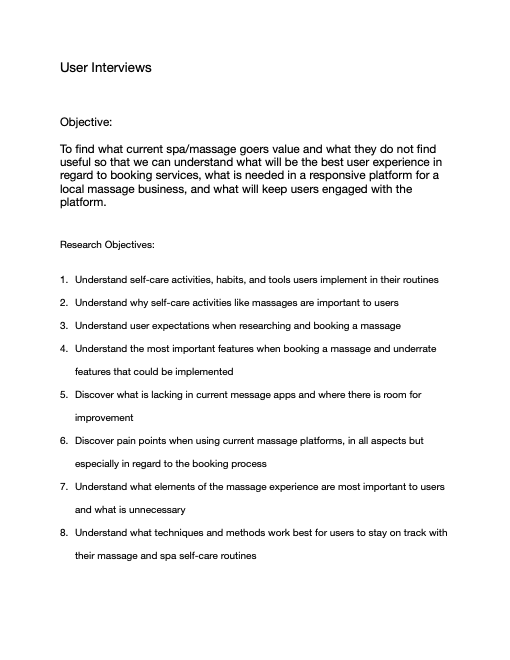
Key takeaways from initial user interviews
Users engage in a wide range of self-care activities, from meditation and yoga to reading, journaling, and exercise. Understanding and accommodating this diversity is essential to crafting a spa/massage experience.
Users stressed the need for consistent self-care routines. They appreciate reminders or tracking features in self-care apps or services to help maintain regular practices.
Personalized recommendations are important. Tailoring self-care suggestions to individual preferences and needs was mentioned several times. Users value platforms that can recommend activities based on their interests, needs, and goals.
Users expressed interest in learning more about self-care practices and their benefits. Providing educational content on self-care techniques and their positive impacts can be beneficial.
Analyzing booking experiences based on feedback
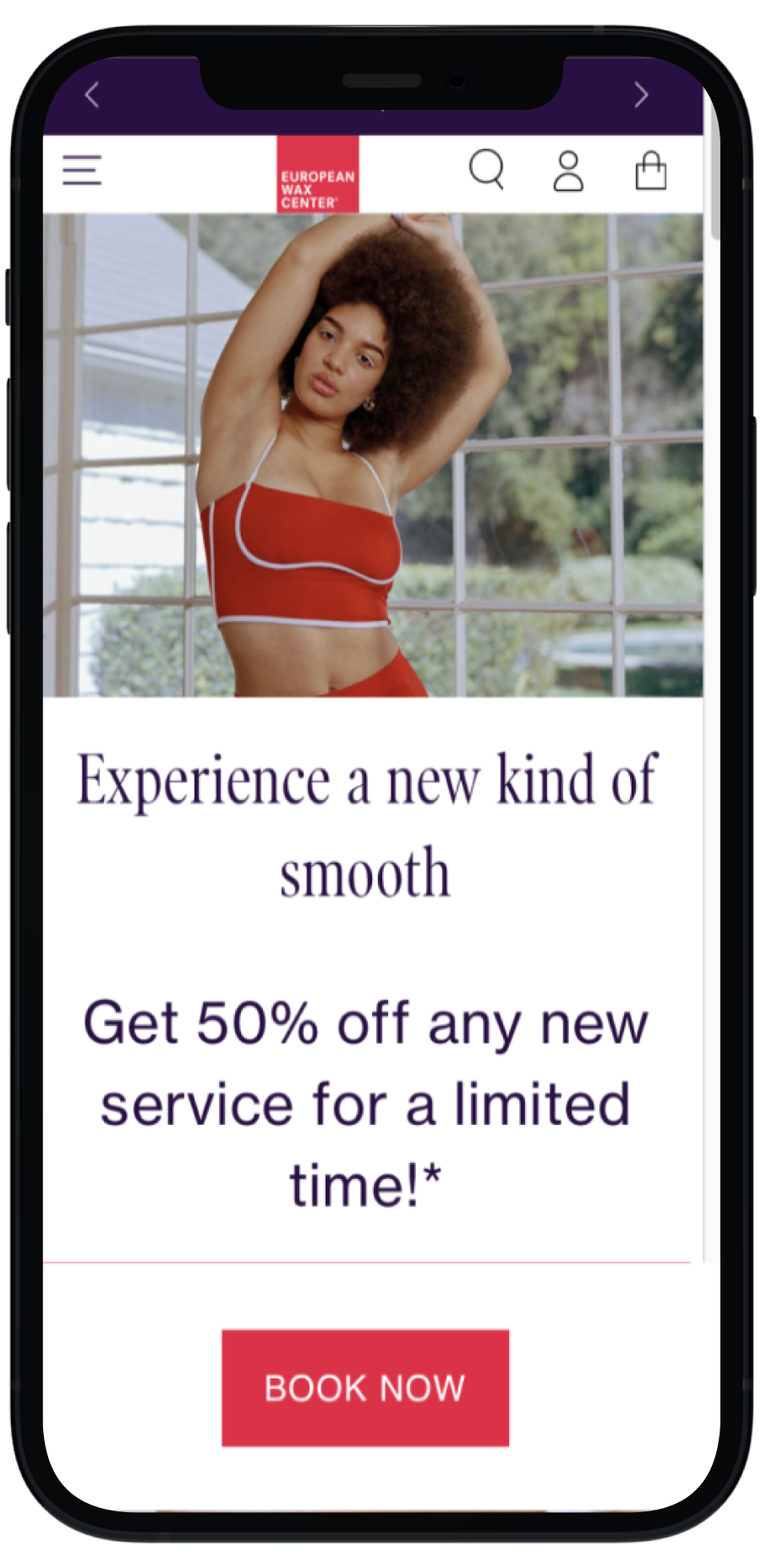
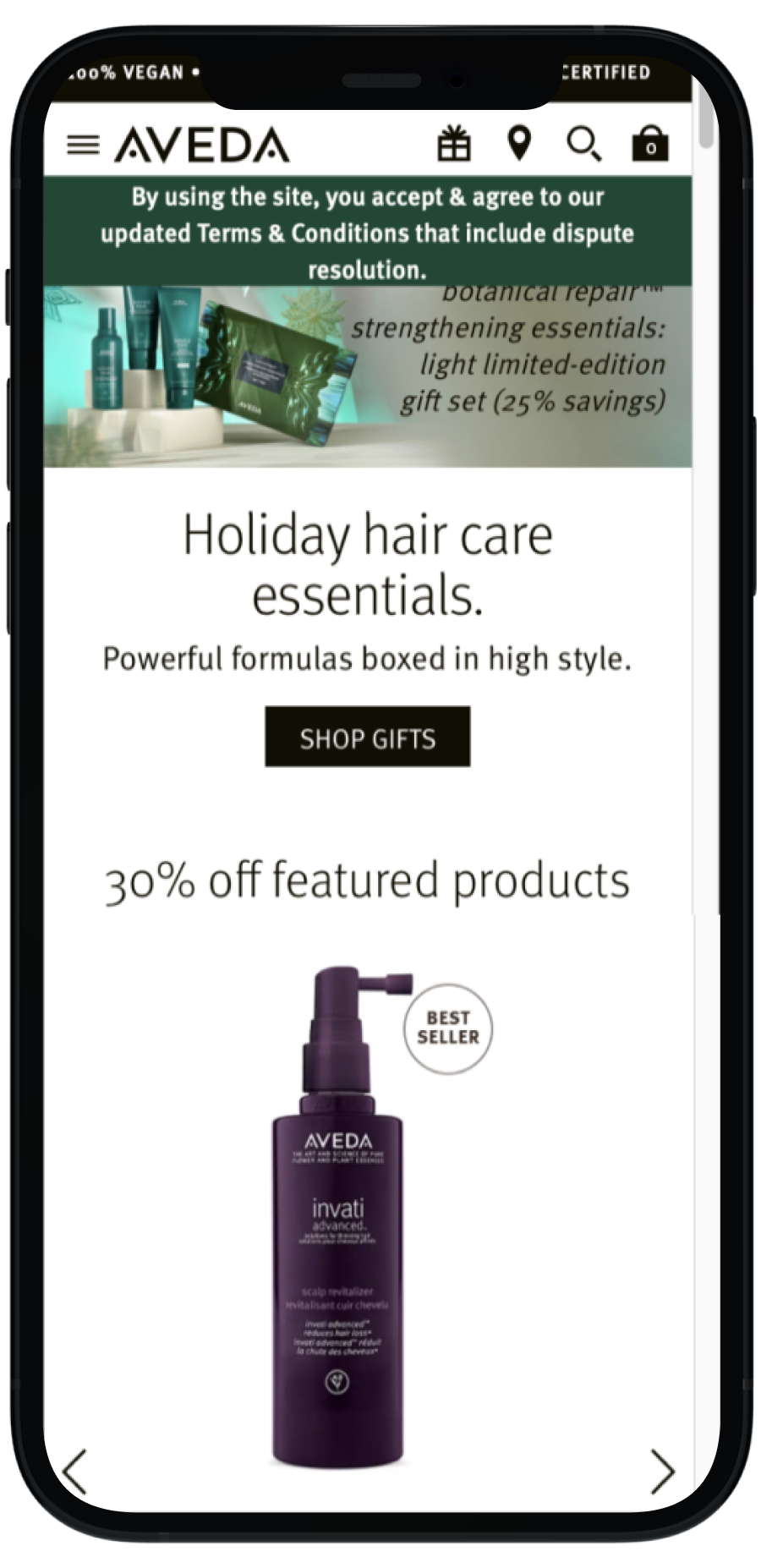
From initial interviews what became most important to the users was a good booking experience, thus I completed an additional analysis of in and out of category booking services which included: Airbnb, Aveda Salons, European Wax Center, and Ulta. These were the companies that were referenced by the users as examples of good booking experiences. Each platform has a different layout with the most important attributes listed below.
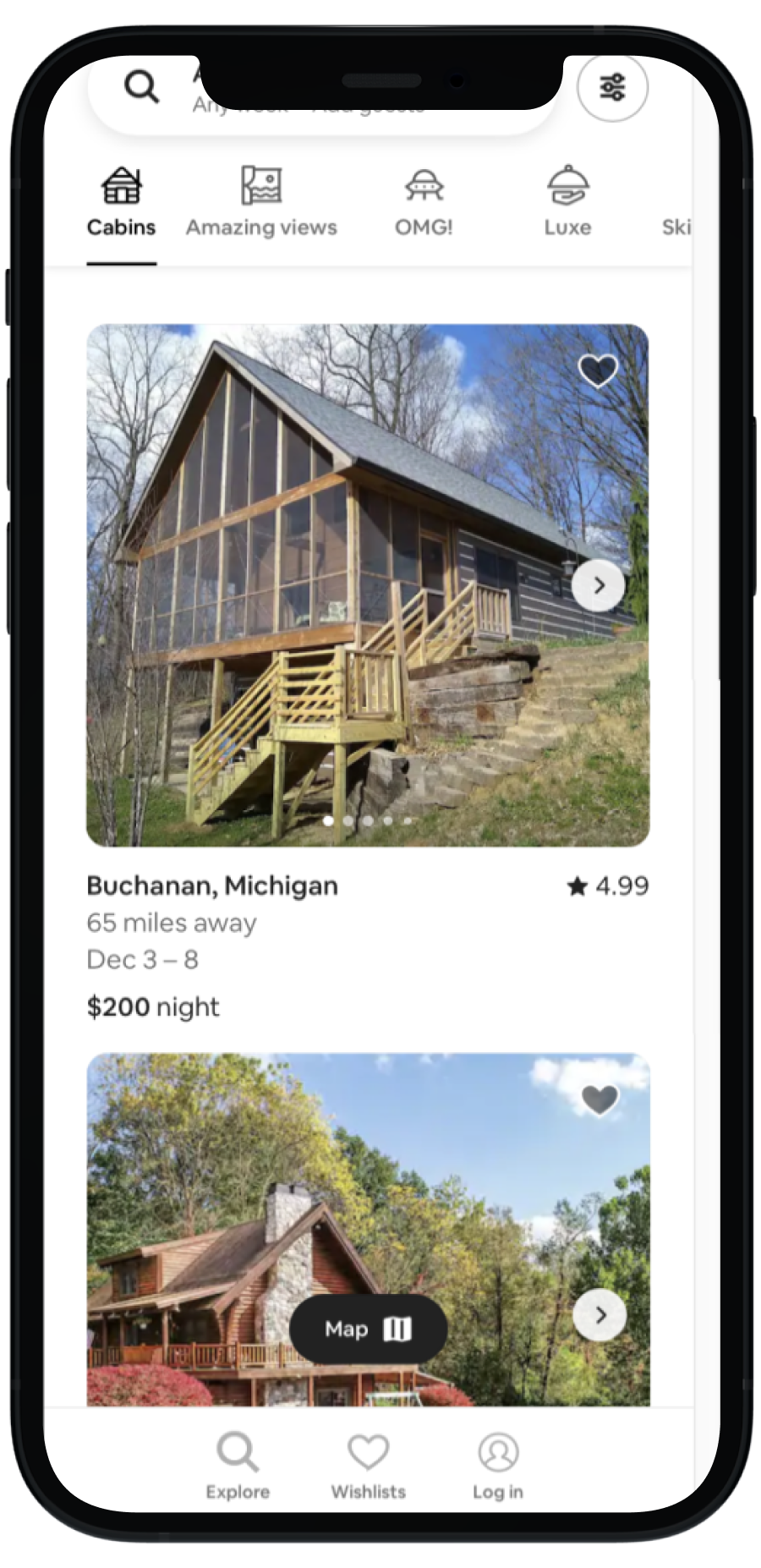
Airbnb
Concise flow: 5 steps
Well-organized information
Smart use of buzzwords and tags
Aveda Salon
Many ways to customize treatment
Confirming each step of the booking process is clear
No obligation to create an account or payment
European Wax Center
Easy to add on or stack services
Flow all on one page, never directed to another page, easy to go back a step
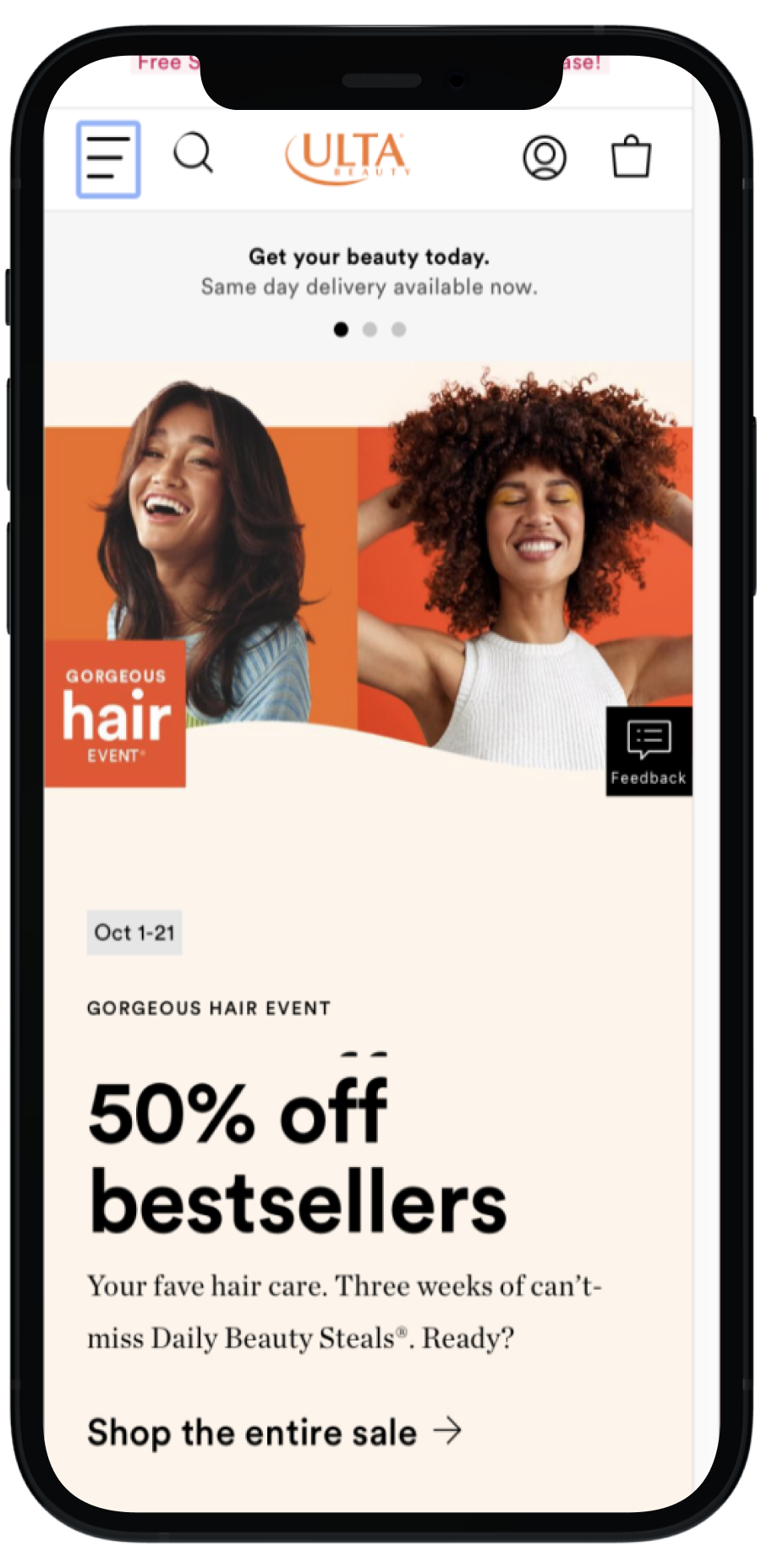
Ulta
Clients can book treatment by choosing the service, provider, or date
Simple 3-step booking process
Key takeaways from follow-up user interviews
Users stated that the process should be easy enough that a person of any age, need, and technical ability can book
Multiple users’ desired customization options and places to leave notes and preferences are important
Users did not like having to make a financial commitment early on in the booking process/. Some users noted that to even get access to booking and service information they had to create an account and/or put down payment information and that was enough to deter them from proceeding further
Some users shared that there should be a way to see the availability of all services, costs, and masseuses, before making a commitment
Organizing research findings into an affinity map
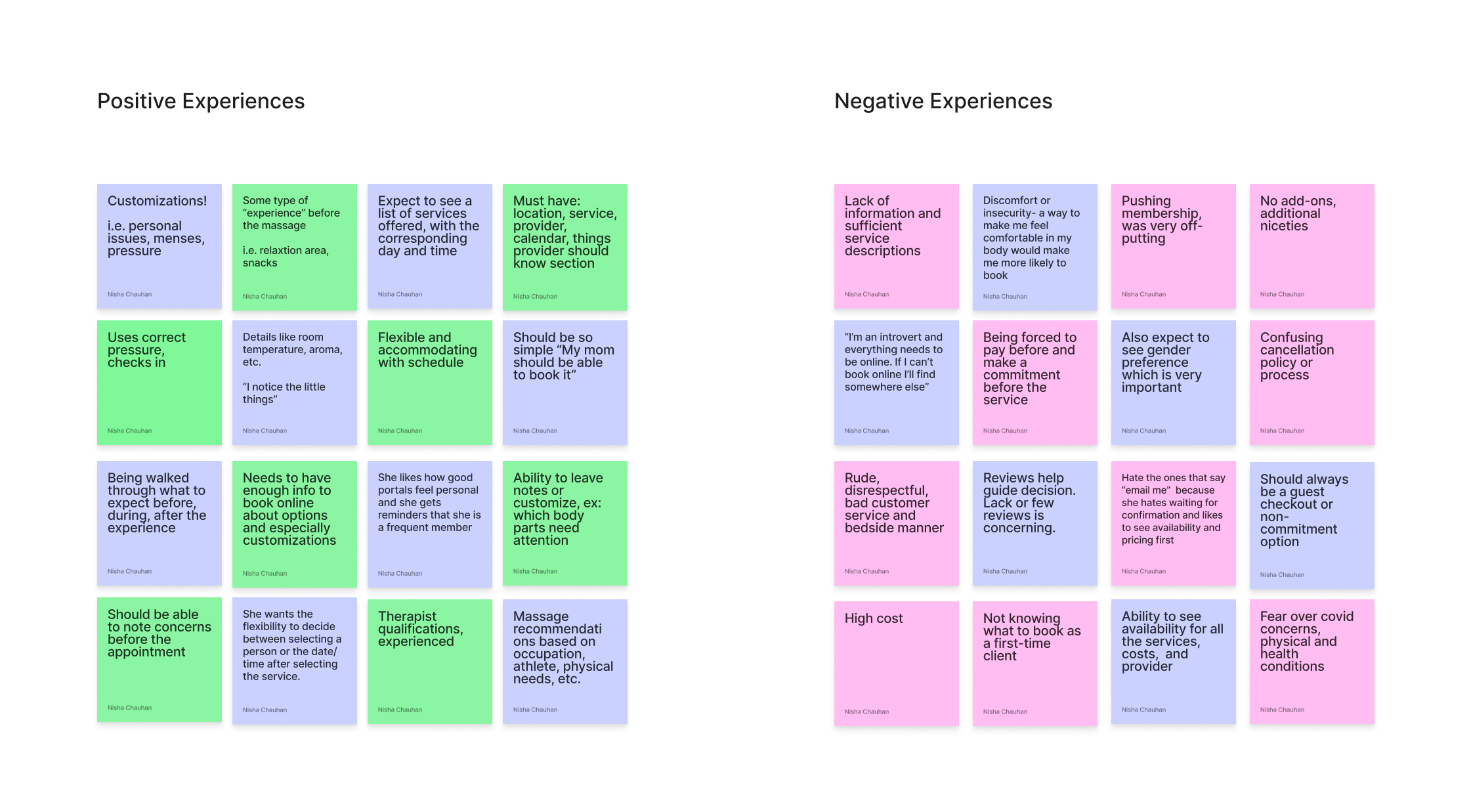
From my interviews, I organized all of the findings into an affinity map. I found that the majority of users do not book an appointment if they are forced to make a commitment and/or enter their financial information. This is especially true if they are new customers and unfamiliar with the company and providers. I also found that being able to voice concerns, having customization options, and having a personalized experience determined whether or not a user would continue to book appointments and remain a client. It was clear that my goal was to create a booking platform that keeps the user engaged in the booking pathway so they commit to the decision to make an appointment.
Synthesizing findings from user interviews
From the affinity map, I was able to group the positive and negative experiences users had booking a massage service. I aimed to emphasize how users can have a seamless and efficient experience during the booking process that would ensure they would follow through with committing to making an appointment.
Positive experiences
Ability to book via multiple pathways, i.e., can enter from a specific date, provider, or service
Ability to toggle back and forth between options, super noncommittal when in the booking flow
Enough information to make an informed decision about a service
For newbies, having the option to select a massage based on physical needs, for example: recommended massage for runners
Simple steps with the ability to ask for customizations/preferences
Negative experiences
Being forced to pay or make an account to proceed forward with booking
Lack of add-ons or customization options
Not being able to find answers to questions and book online
Confusing process of booking and messy cancellation
Lack of instant confirmation after booking
In ability to select provider based on certain preferences like gender
Creating behavioral archetypes from the research
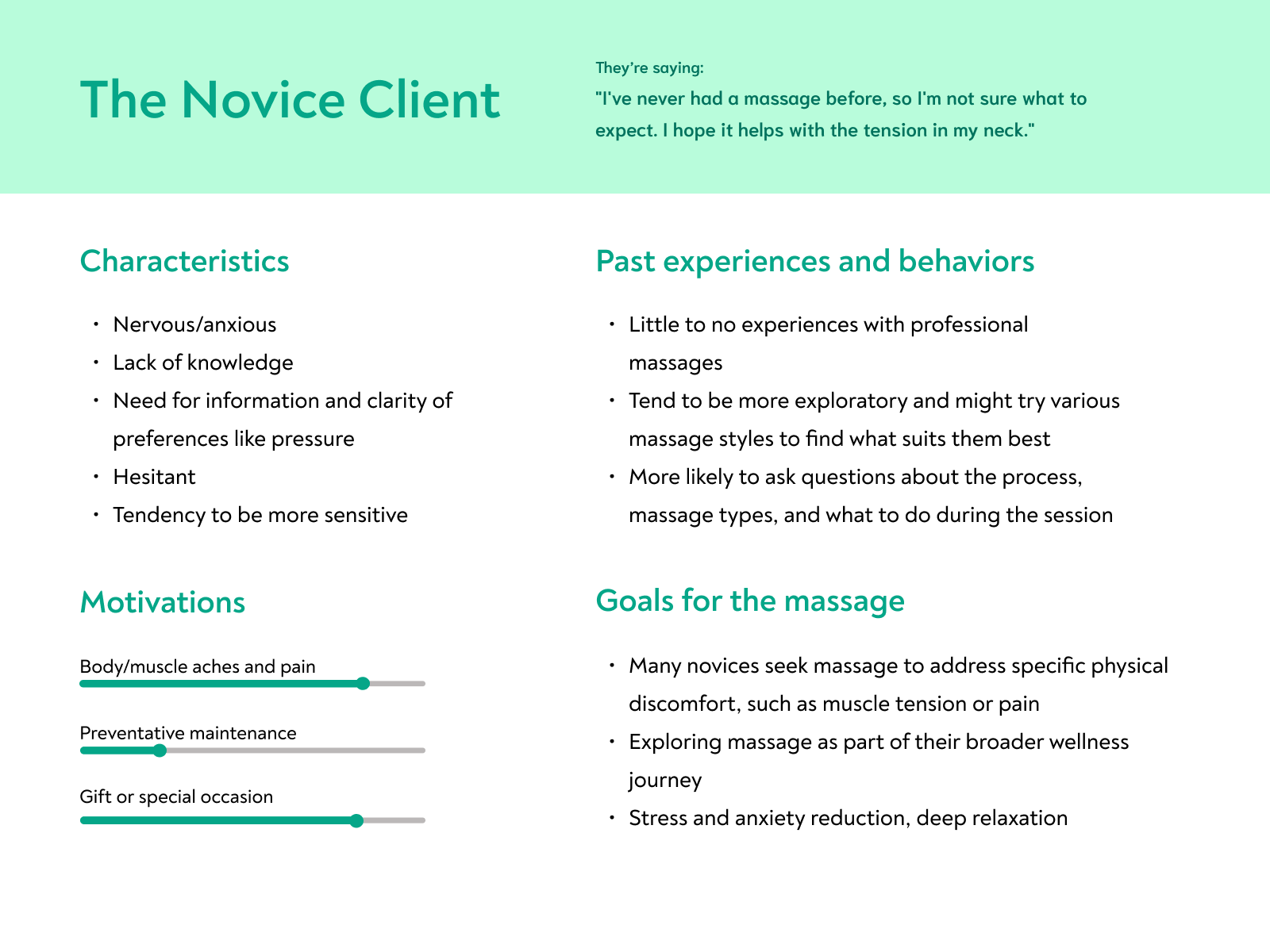
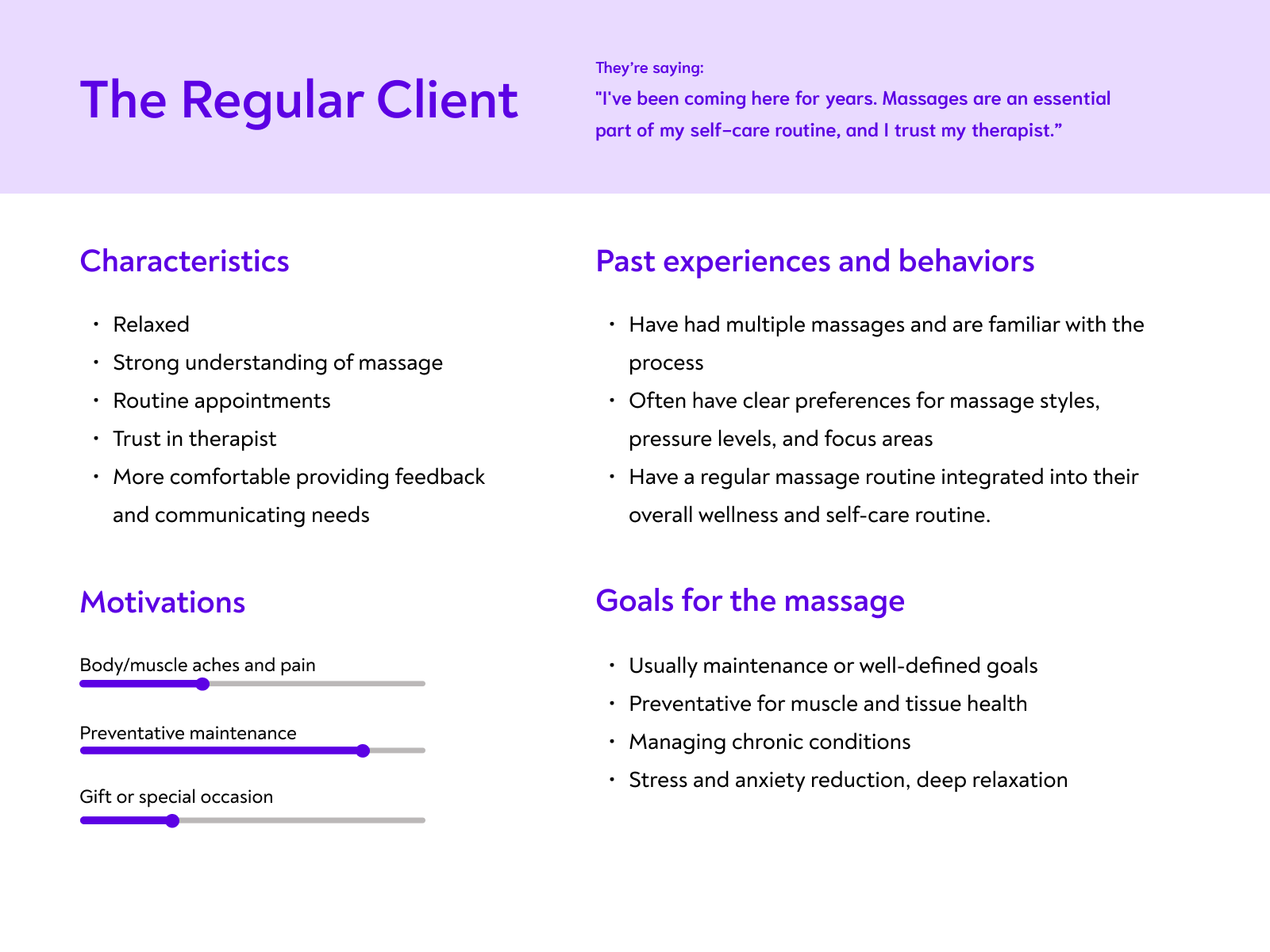
Creating behavioral archetypes was a crucial step for me in understanding and empathizing with the end users of the product. By delving into the psychology and behaviors of users, I was able to build a more user-centric and intuitive design that resonates with their preferences, motivations, and pain points.
Defining the problem with how might questions
By understanding these archetypes, I was able to formulate "How might we?" questions that directly address the unique needs and preferences of each archetype. For instance, “the novice” archetype does not have much experience and needs more information than the regular client, so an important first question was, "How might we create a user experience that reassures and guides this type of patron through the process of booking a massage?" This approach ensured that my designs were tailored to various types of users, enhancing the likelihood of creating an effective and engaging solution.
How might we help users have a seamless booking process?
How might we answer users’ questions when completing the booking process?
How might we make the booking process quick and easy?
How might we make users feel they are booking a service that addresses their personal needs?
How might we create a booking process that reassures and guides users of various experience levels?
Constructing low fidelity wireframes
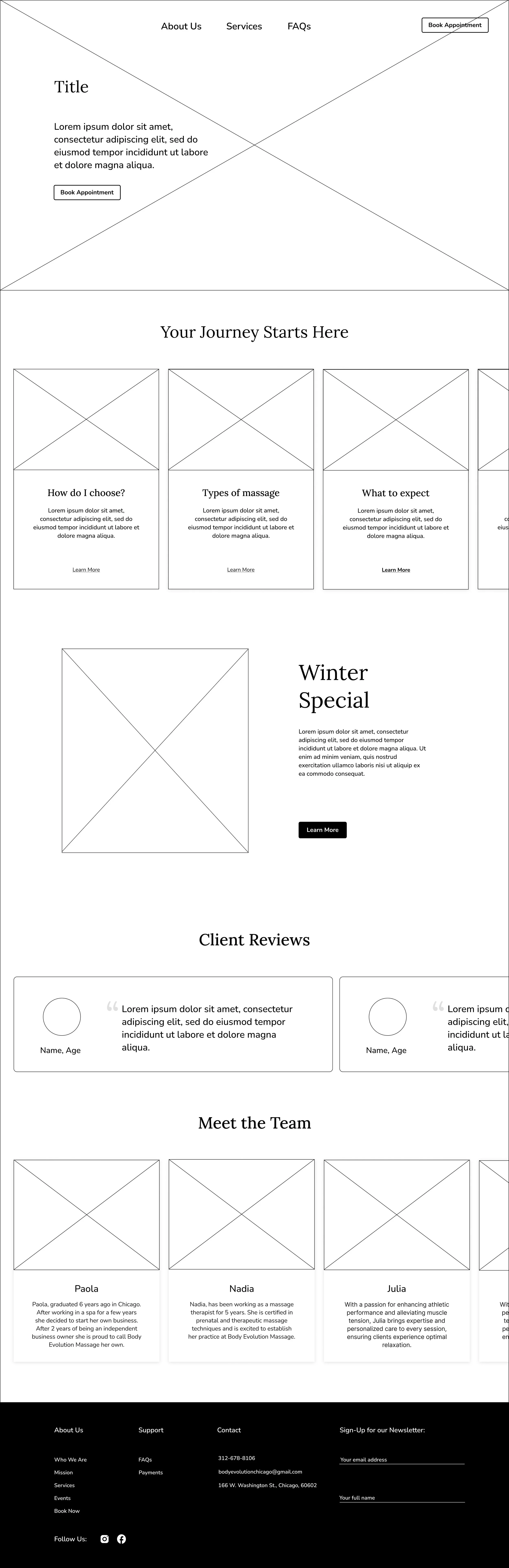
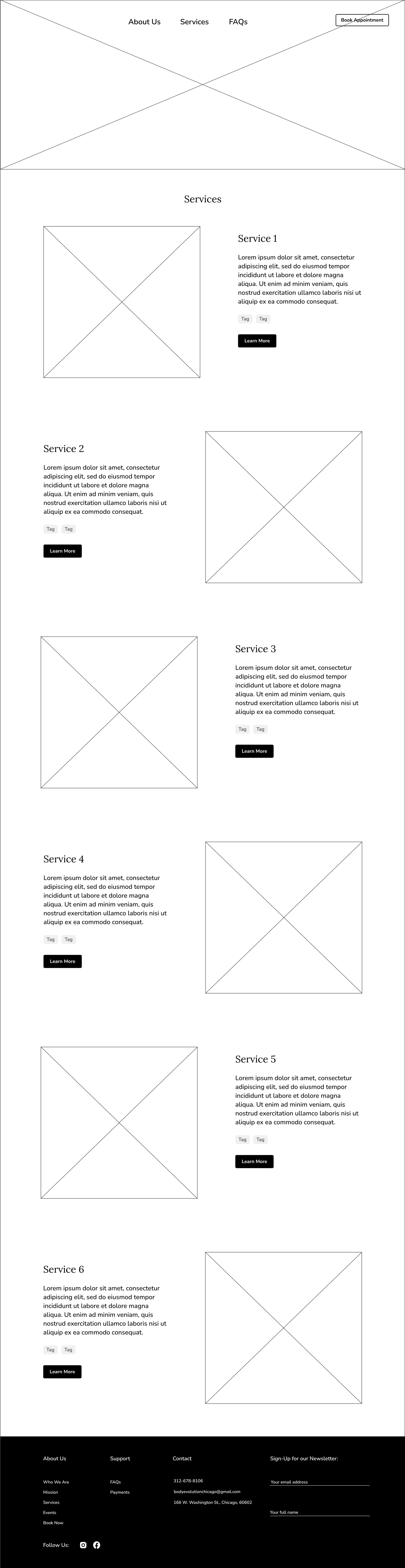
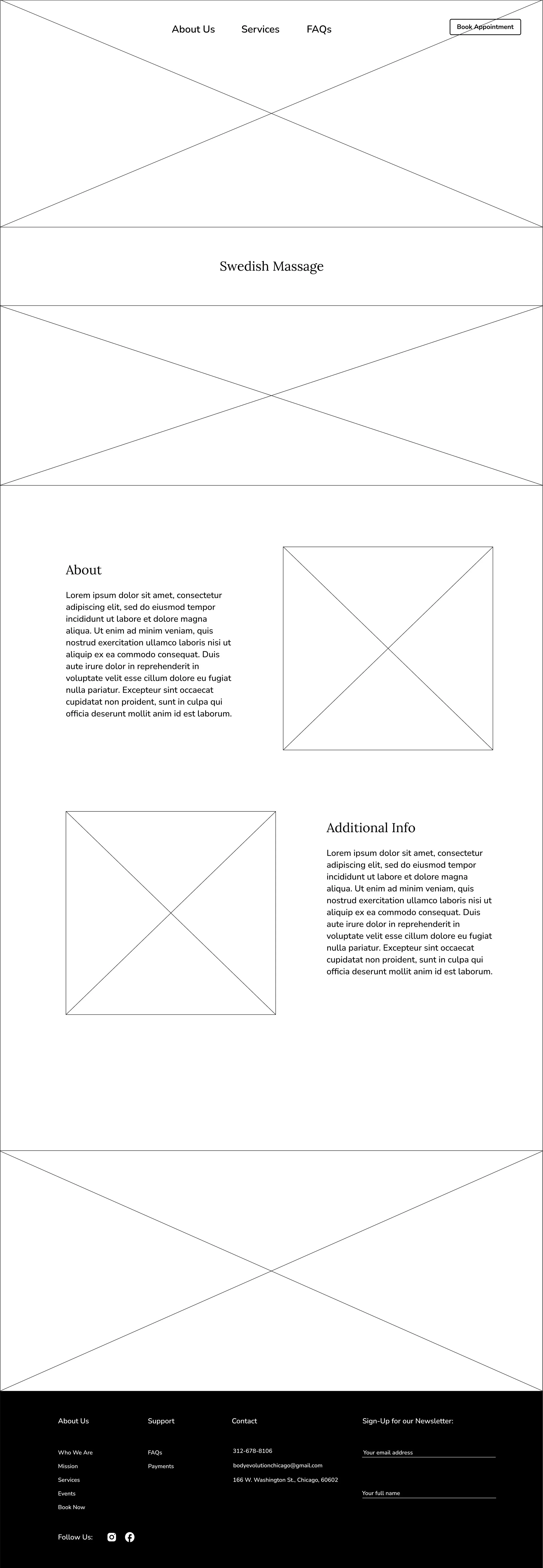
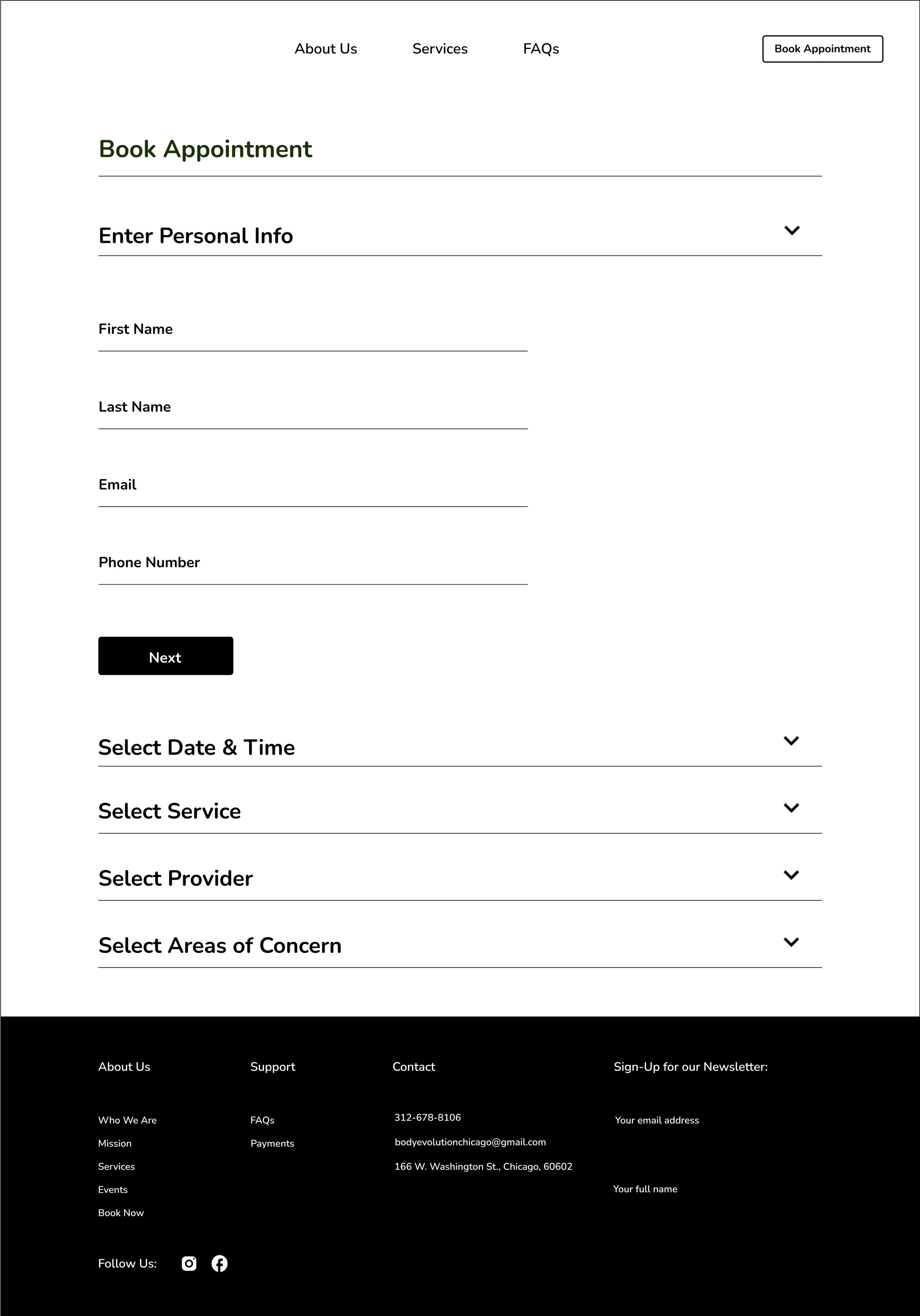
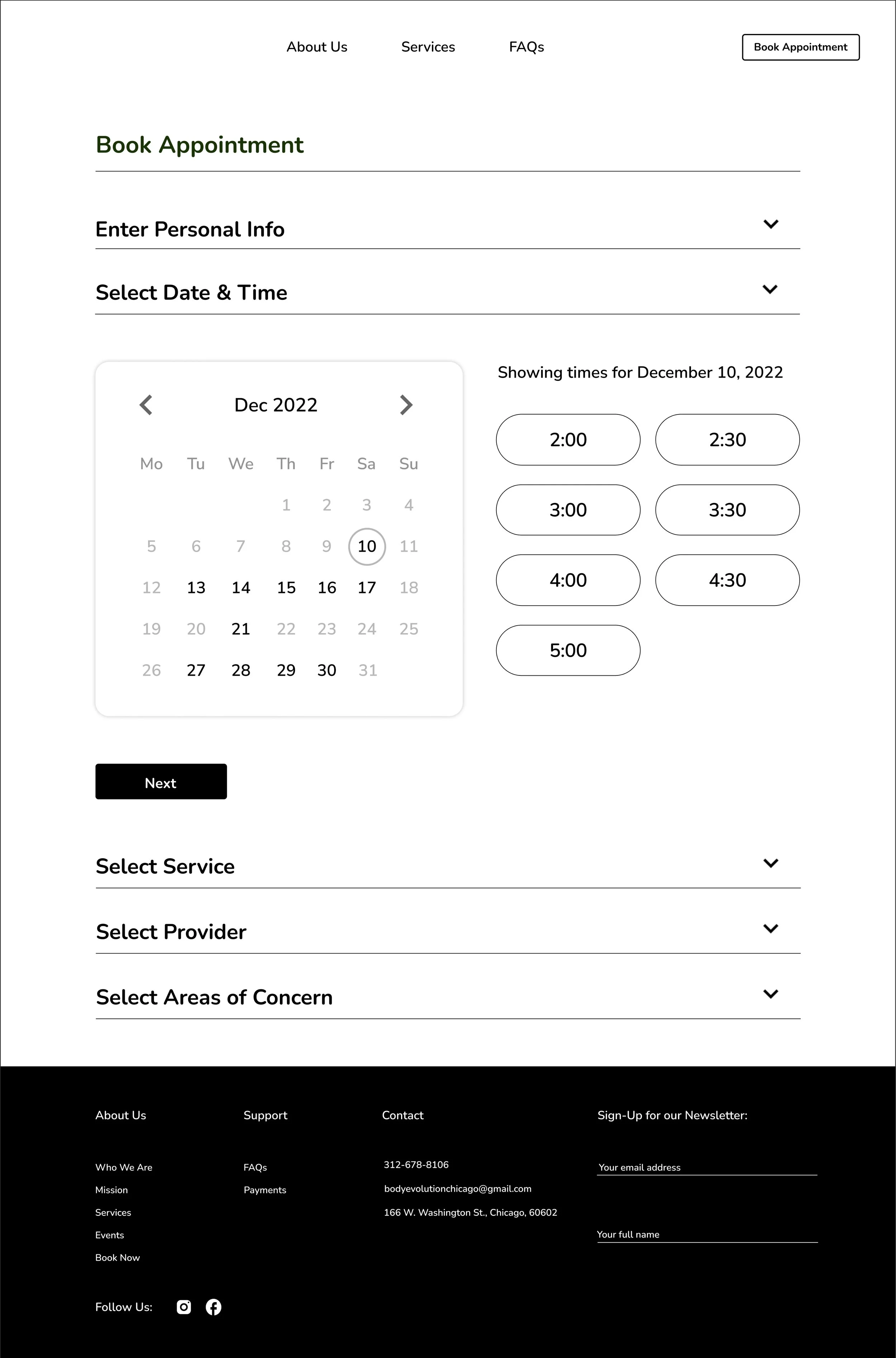
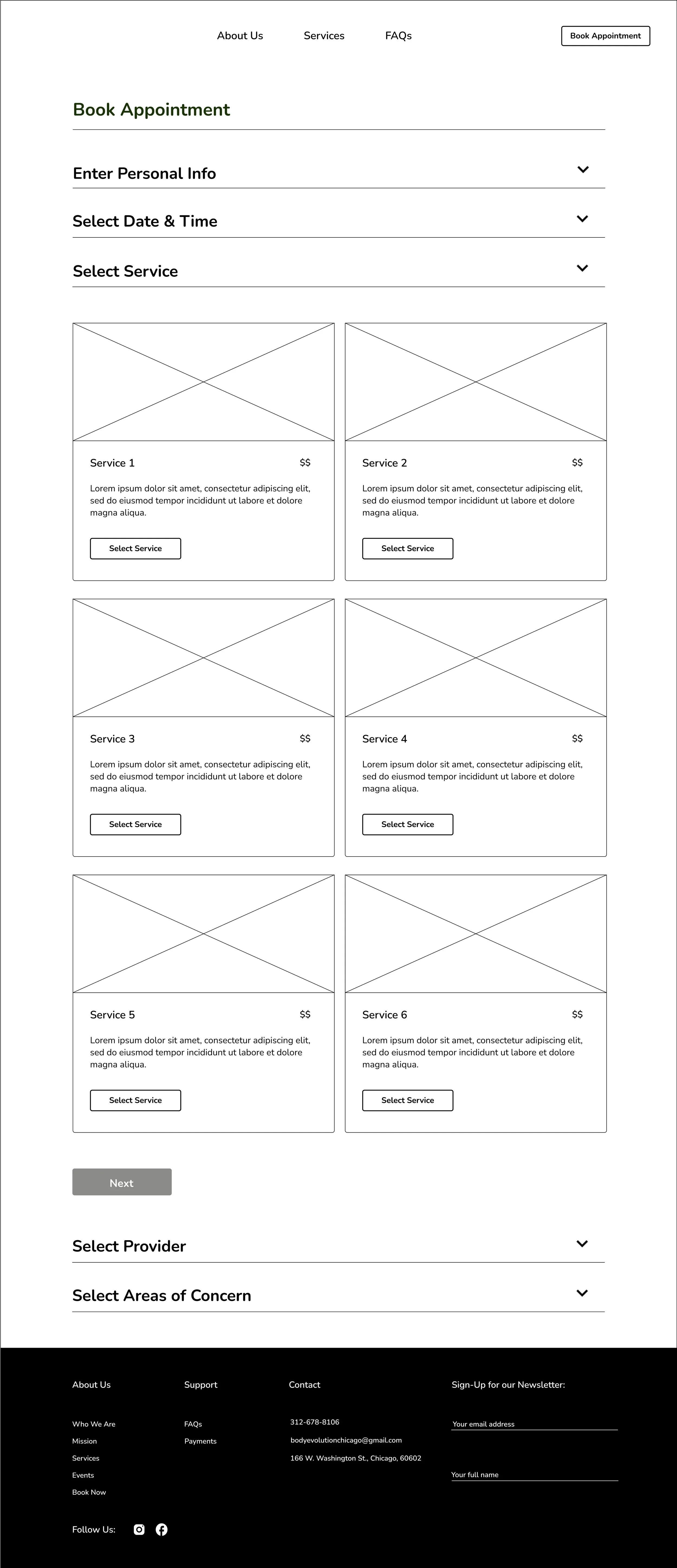
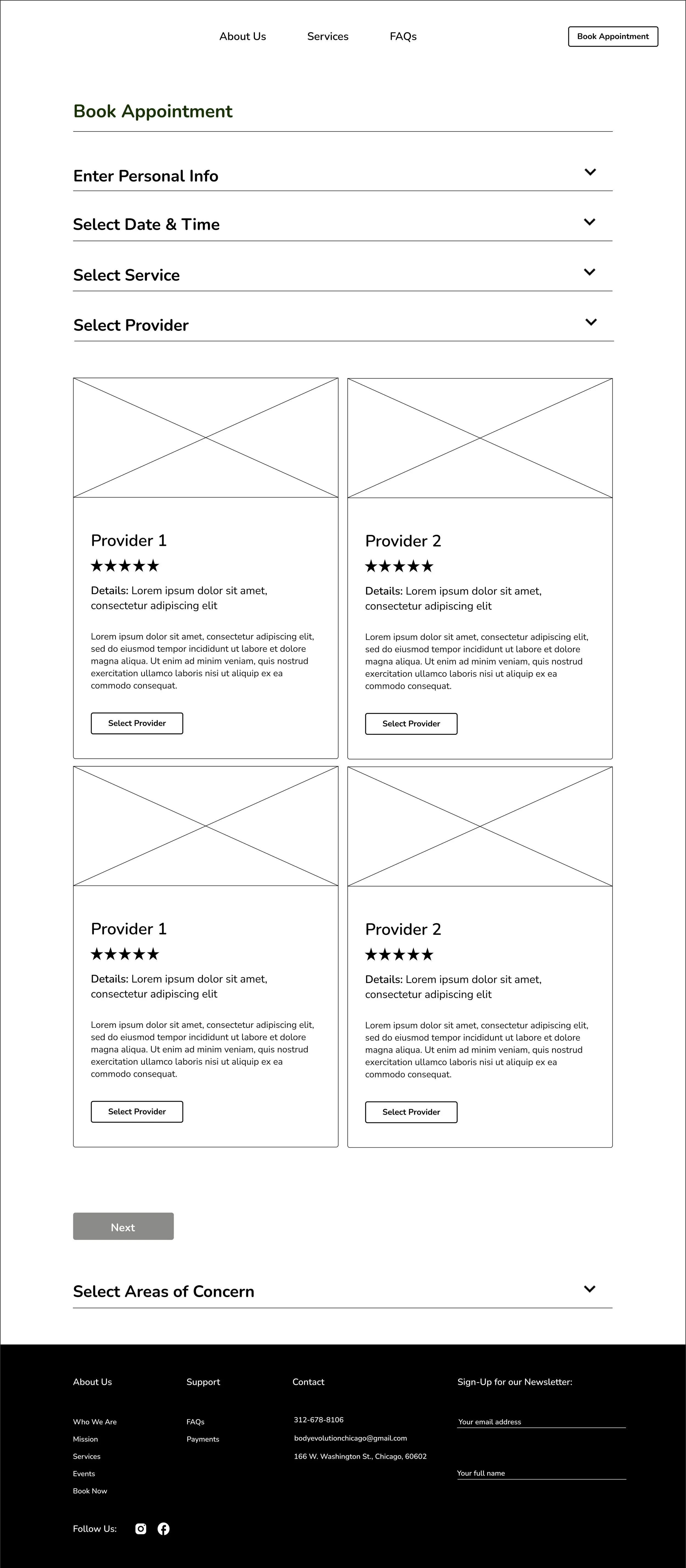
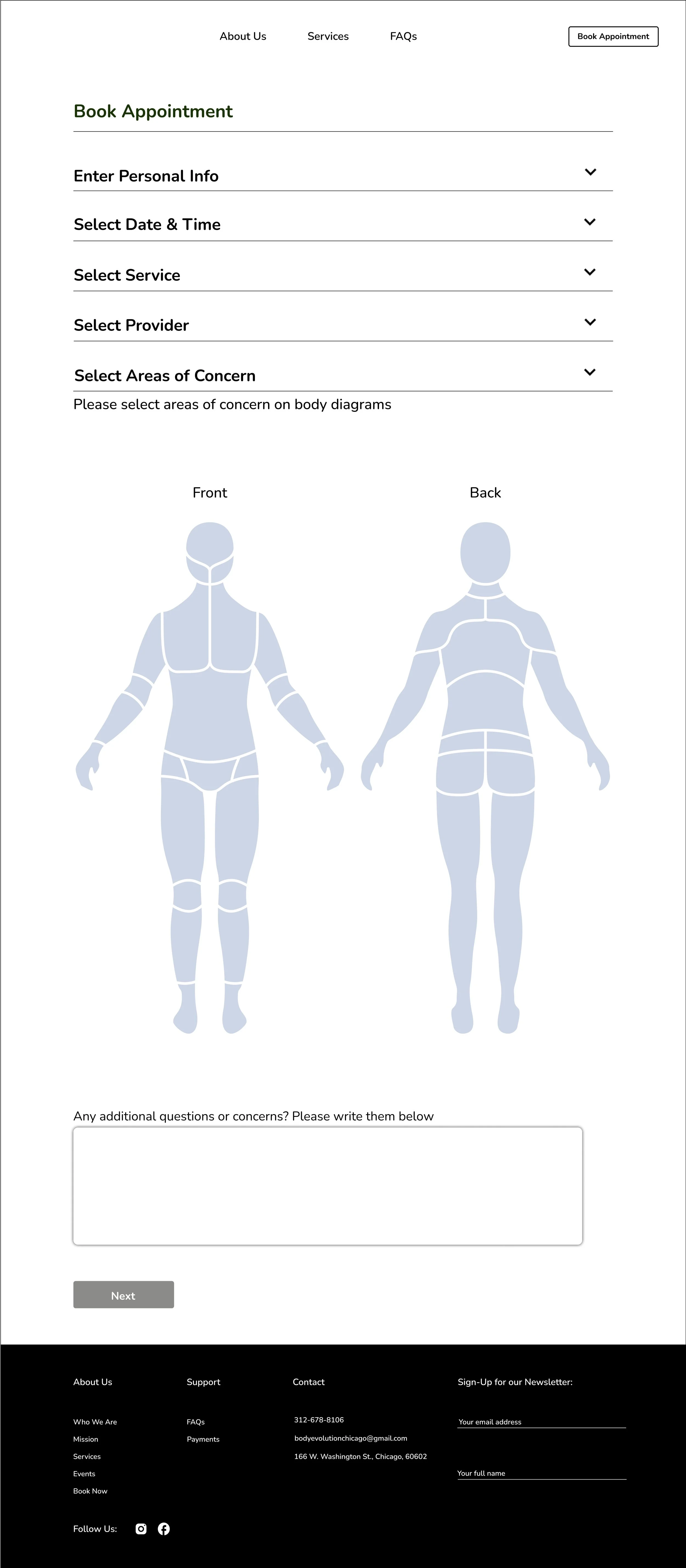
For this student project, I assumed that the business needed to utilize all of the information in its current flow, but the design and structure could be improved. I used the results of the user interviews, group critiques, and mentor feedback to finalize the design of the mid-fidelity wireframes. This stage solved the main problem of the order of the booking process and which components were pertinent and which should be omitted.
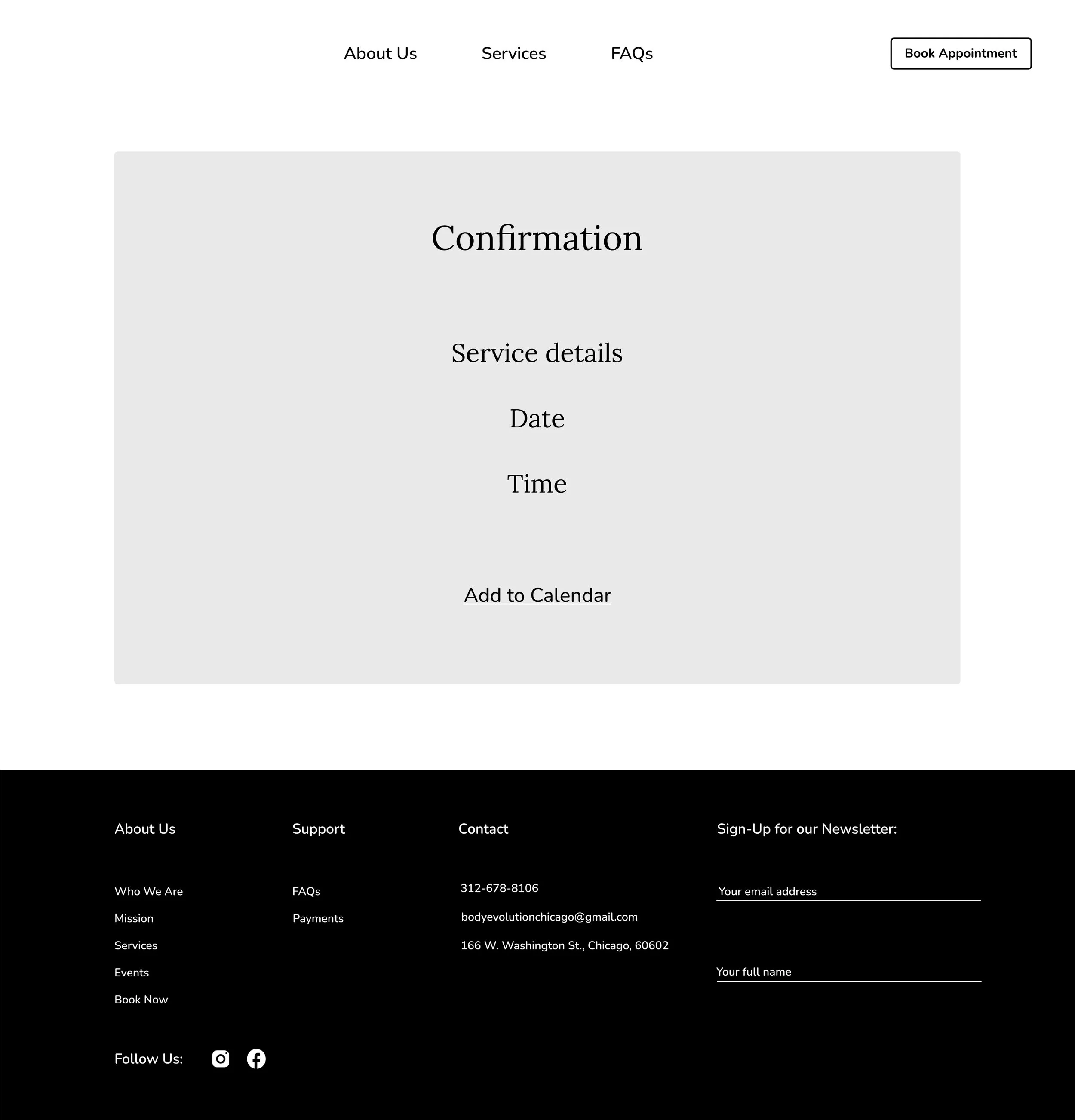
Homepage and Service Pages
1.
3.
5.
Booking Flow Pages
2.
4.
6.
Refining the brand
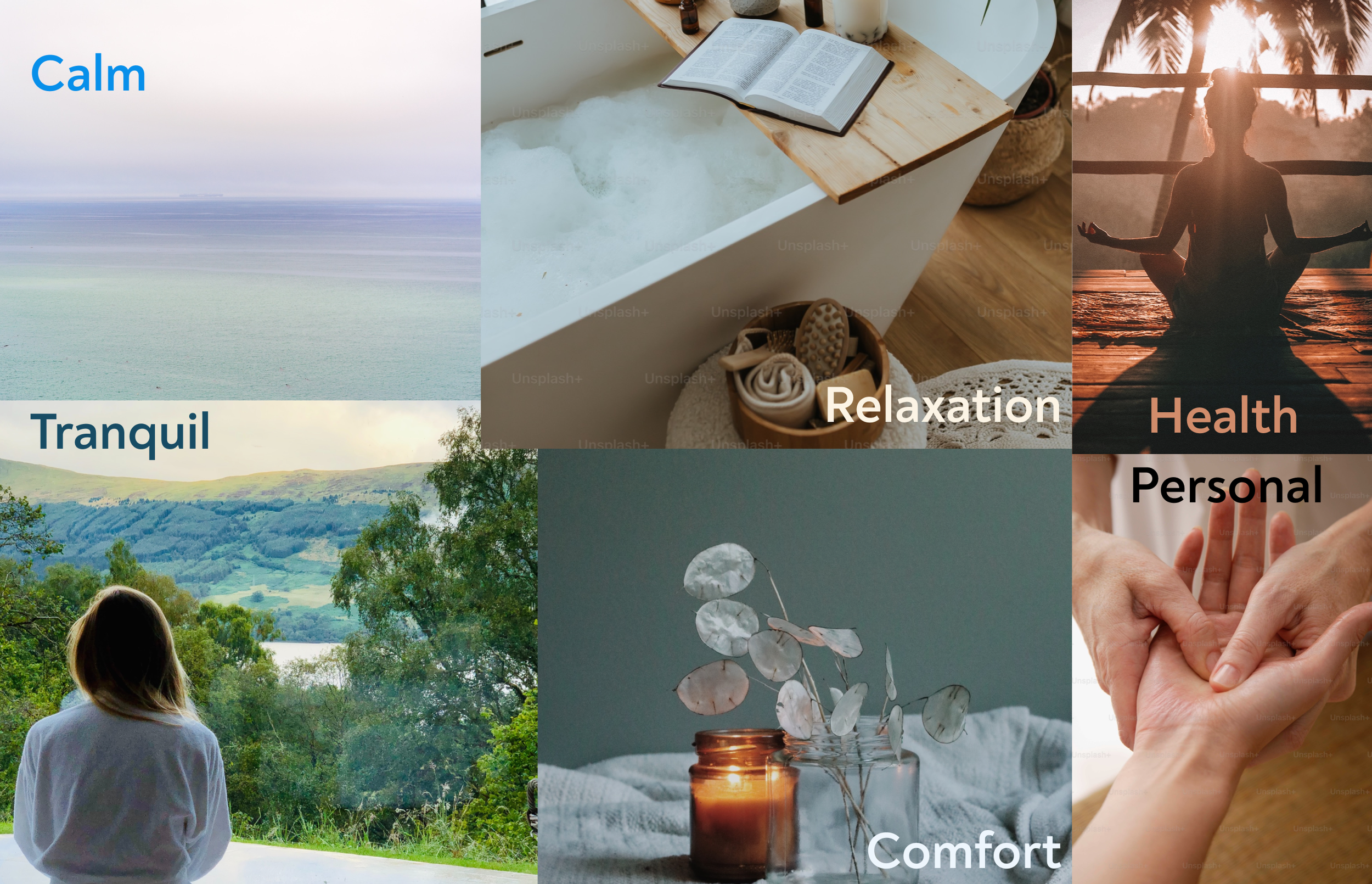
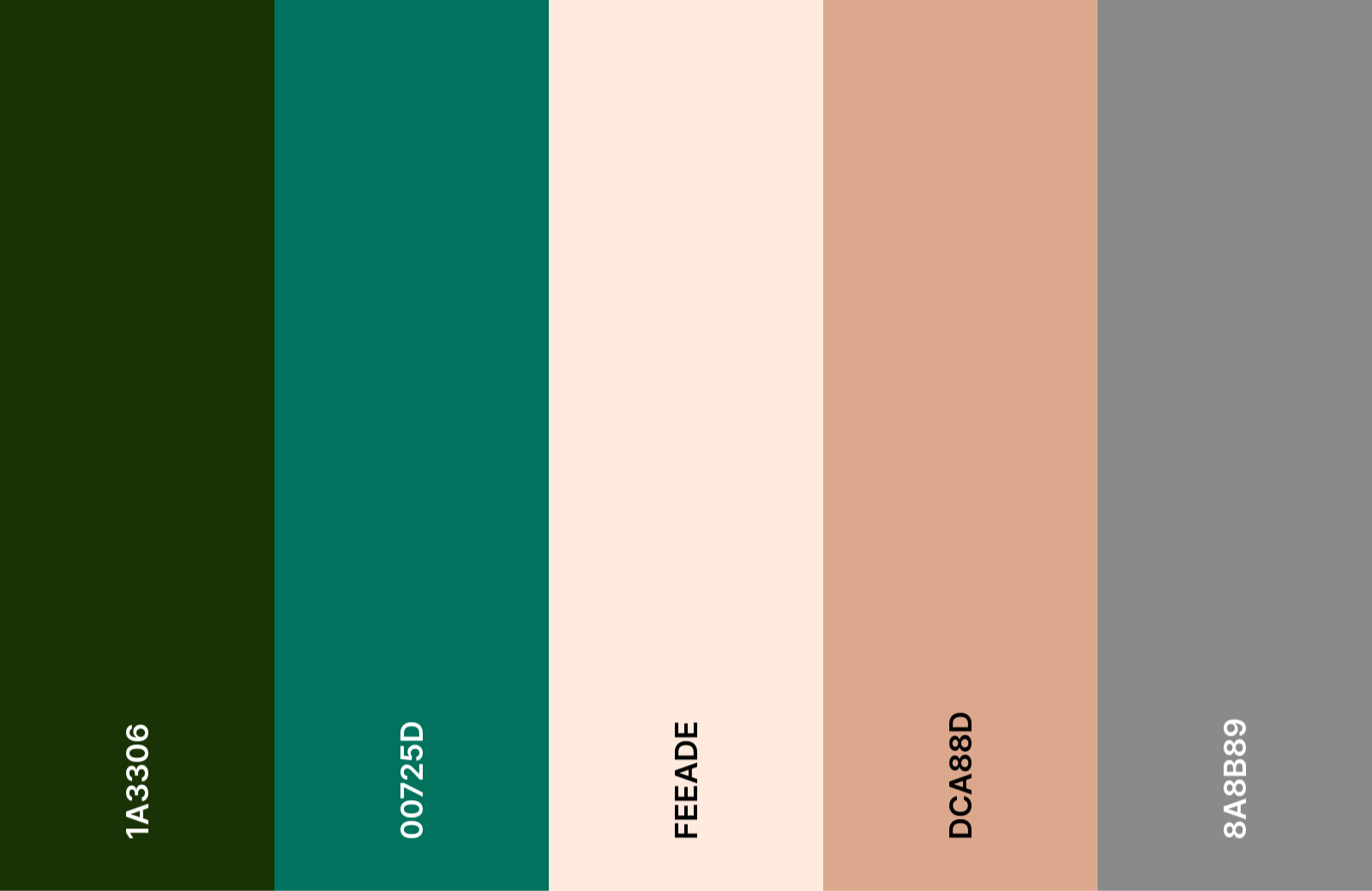
I wanted to develop a logo and reimagine a brand identity that illustrated the relaxing and trusting feel of a neighborhood massage studio but also felt clean and professional. Body-evolution-massage currently does not have a logo and it was very exciting to create one for them as opposed to redesigning an existing logo. I started with creating a mood board to use as a reference for the feelings and values of the final design’s style. Once the voice and tone of the brand were decided, this set the basis for the color scheme, font choices, logo, and components
Mood Board
Color Scheme
Logo
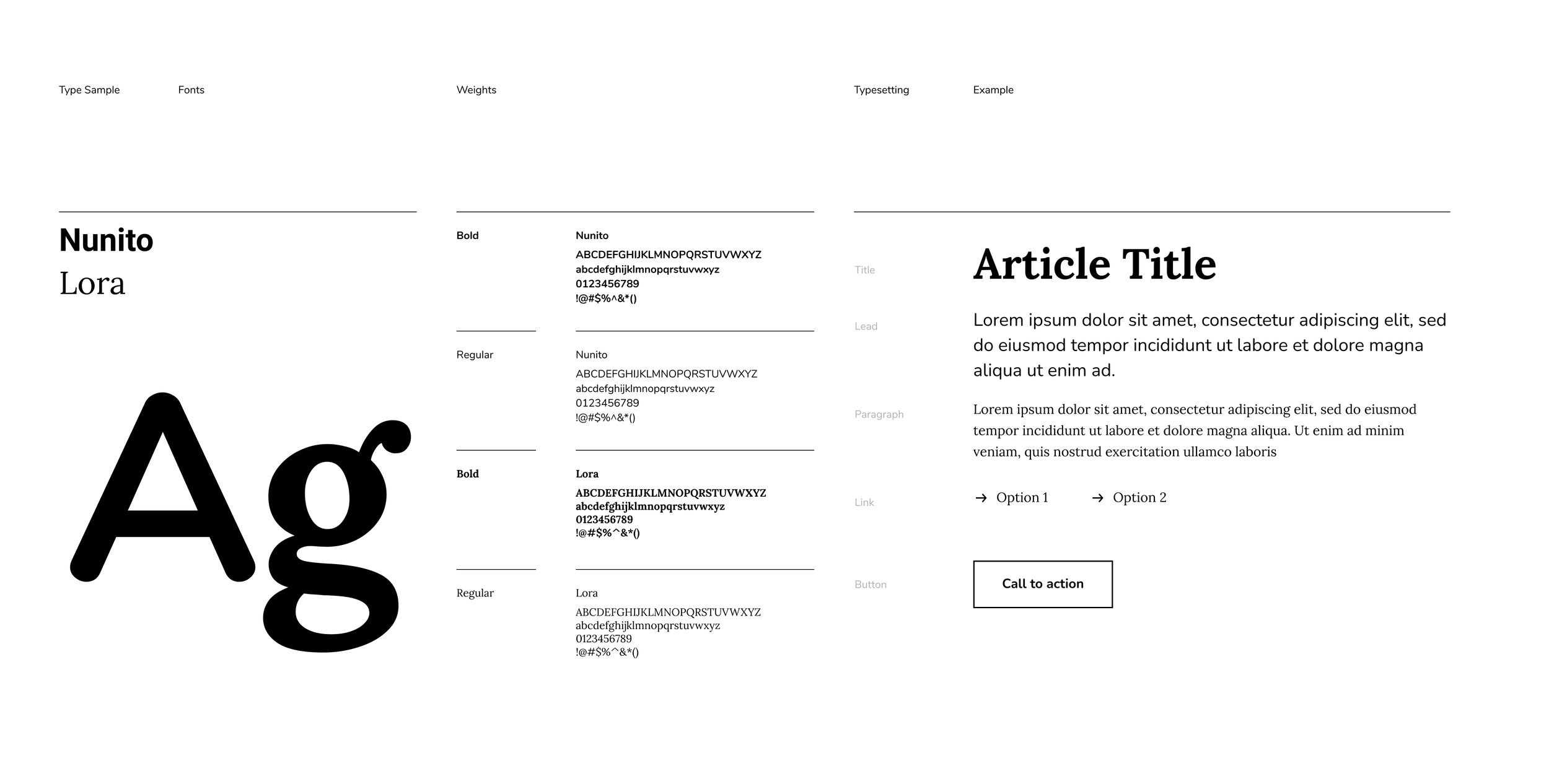
Font System
Crafting a component library
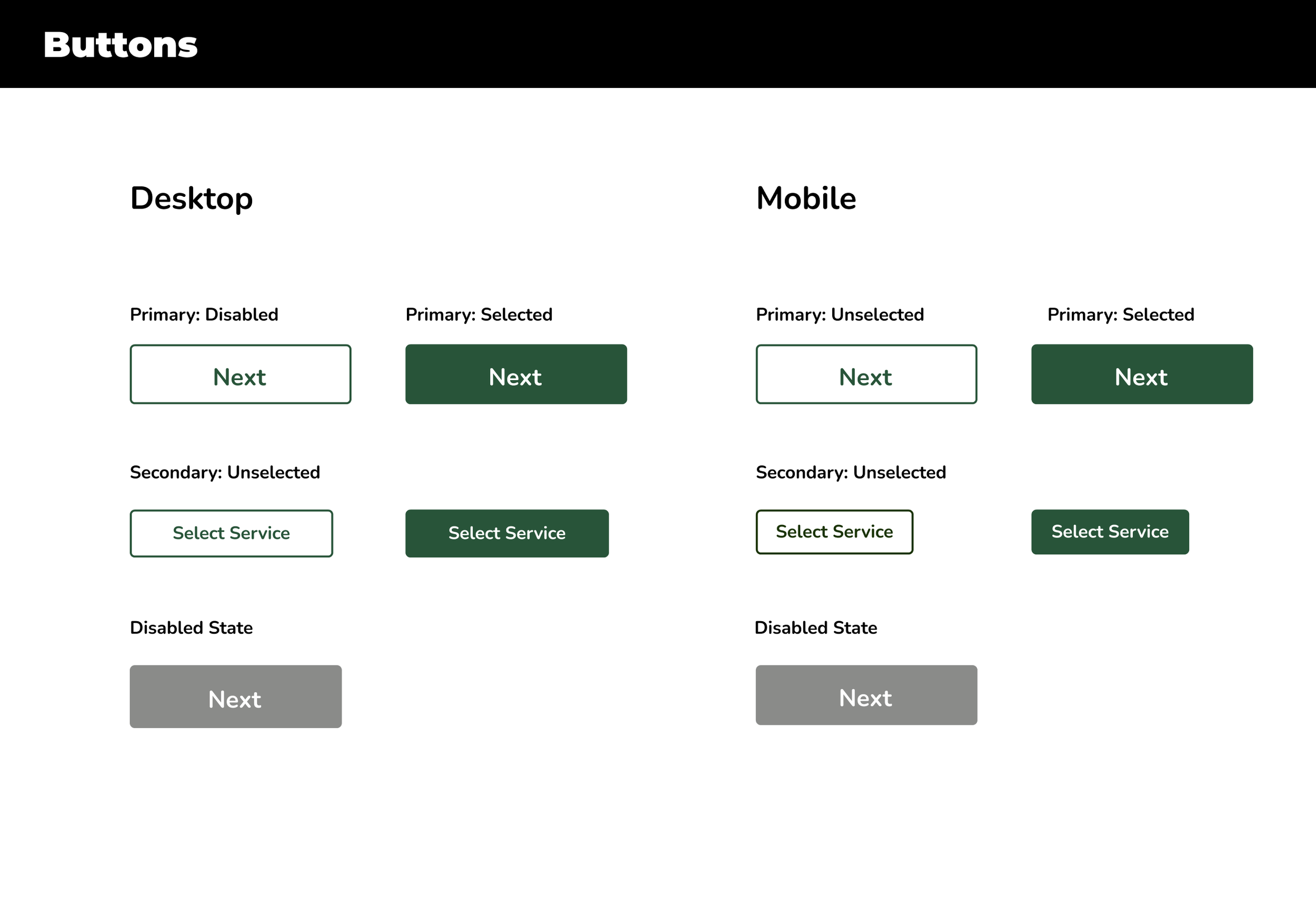
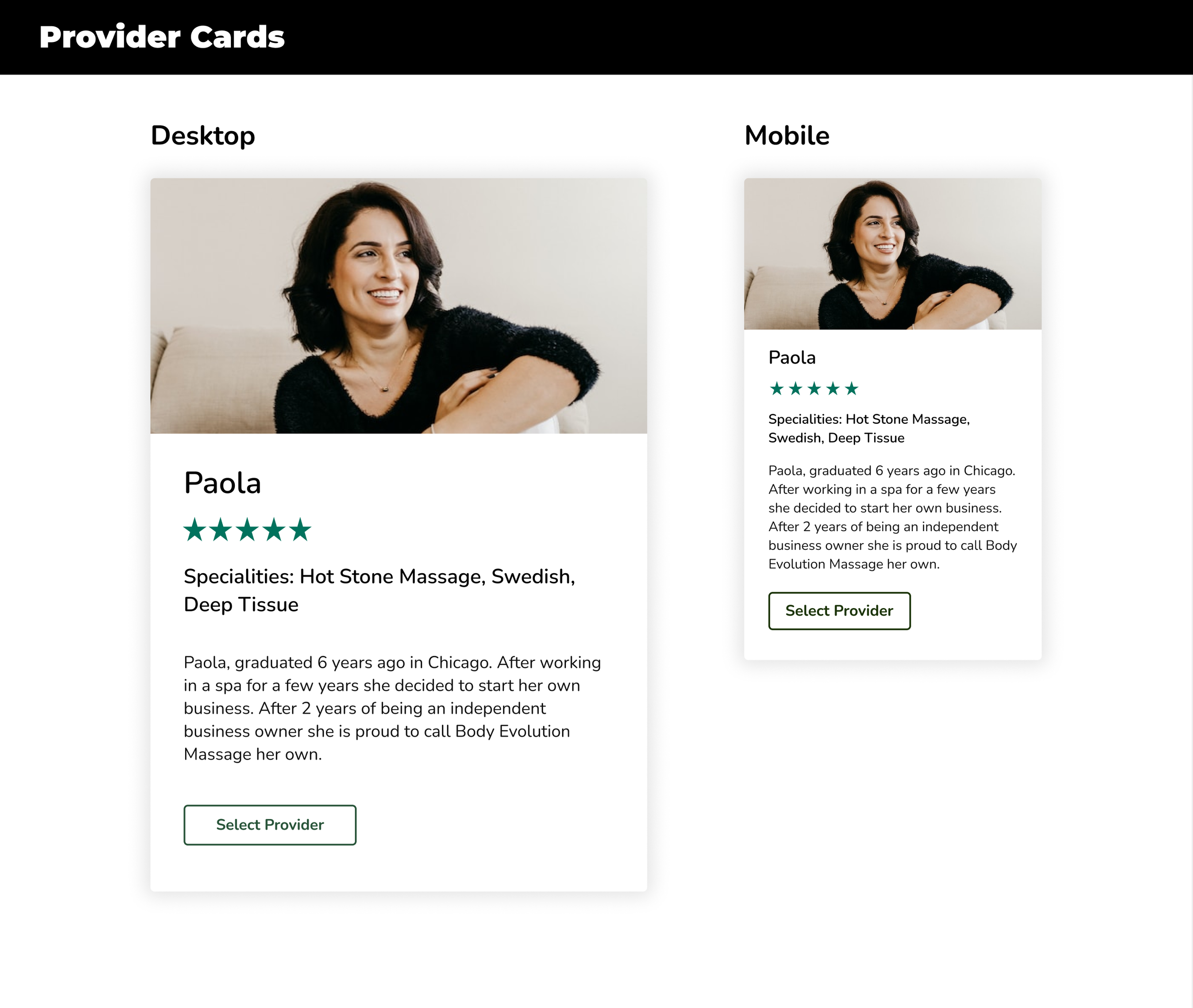
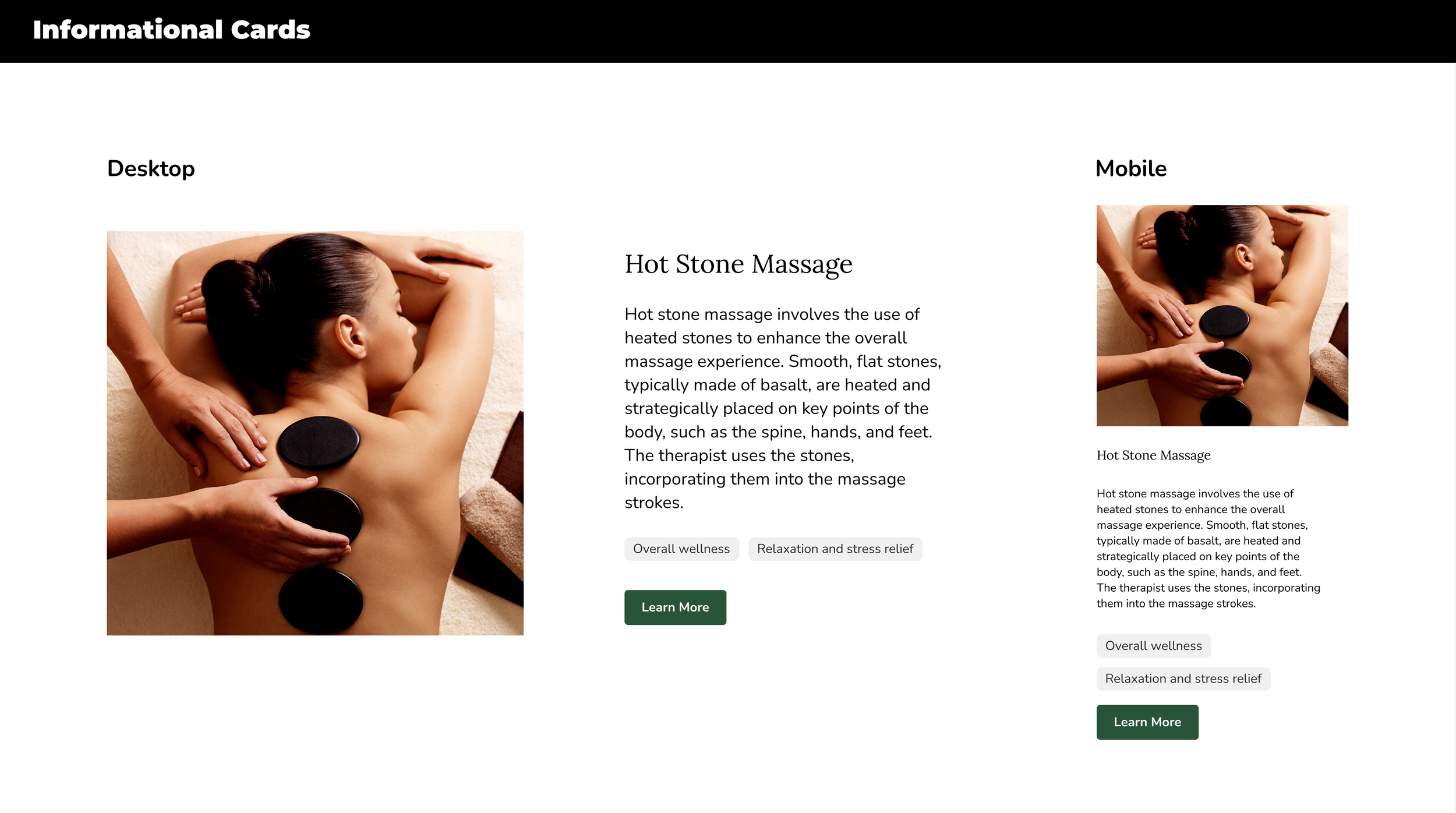
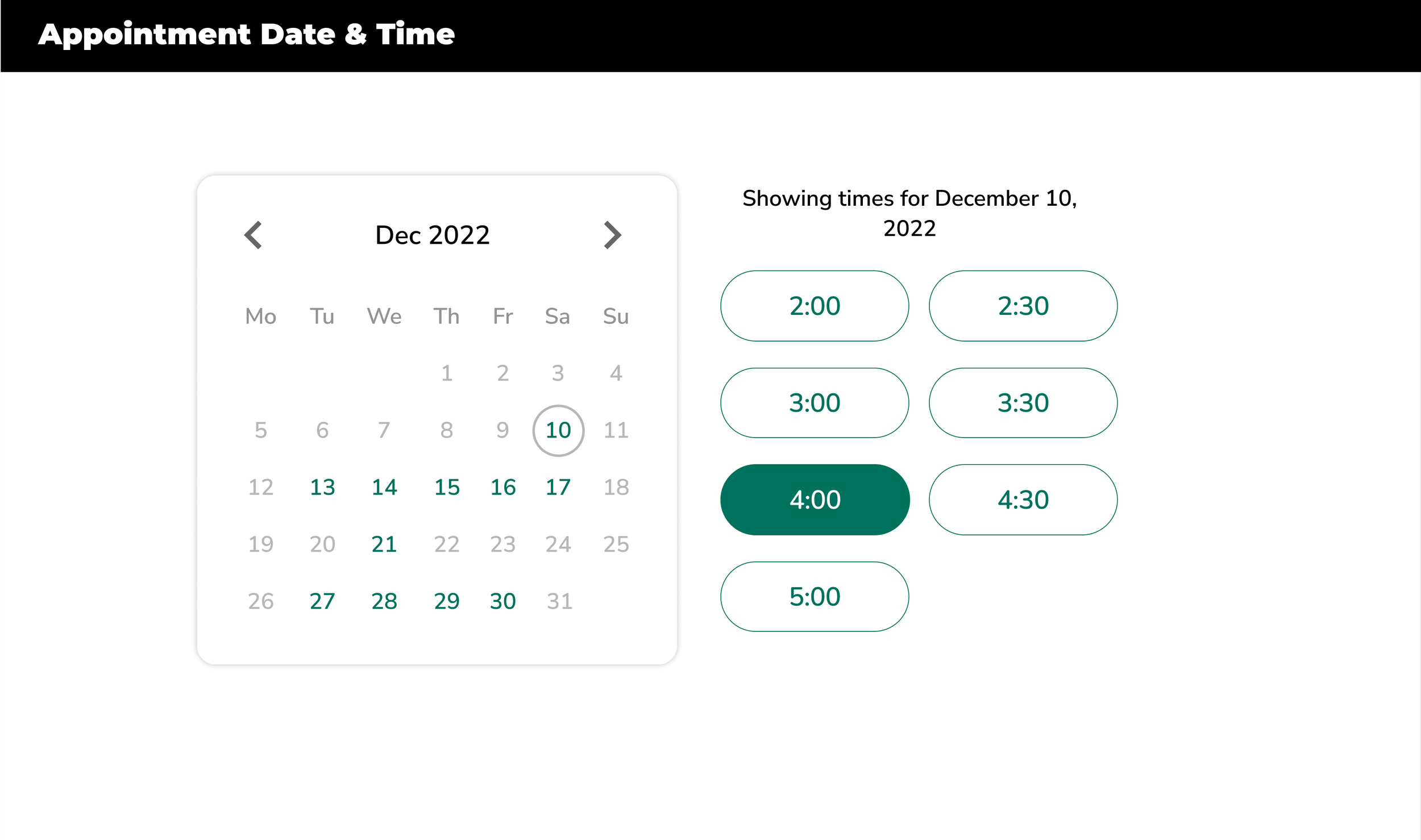
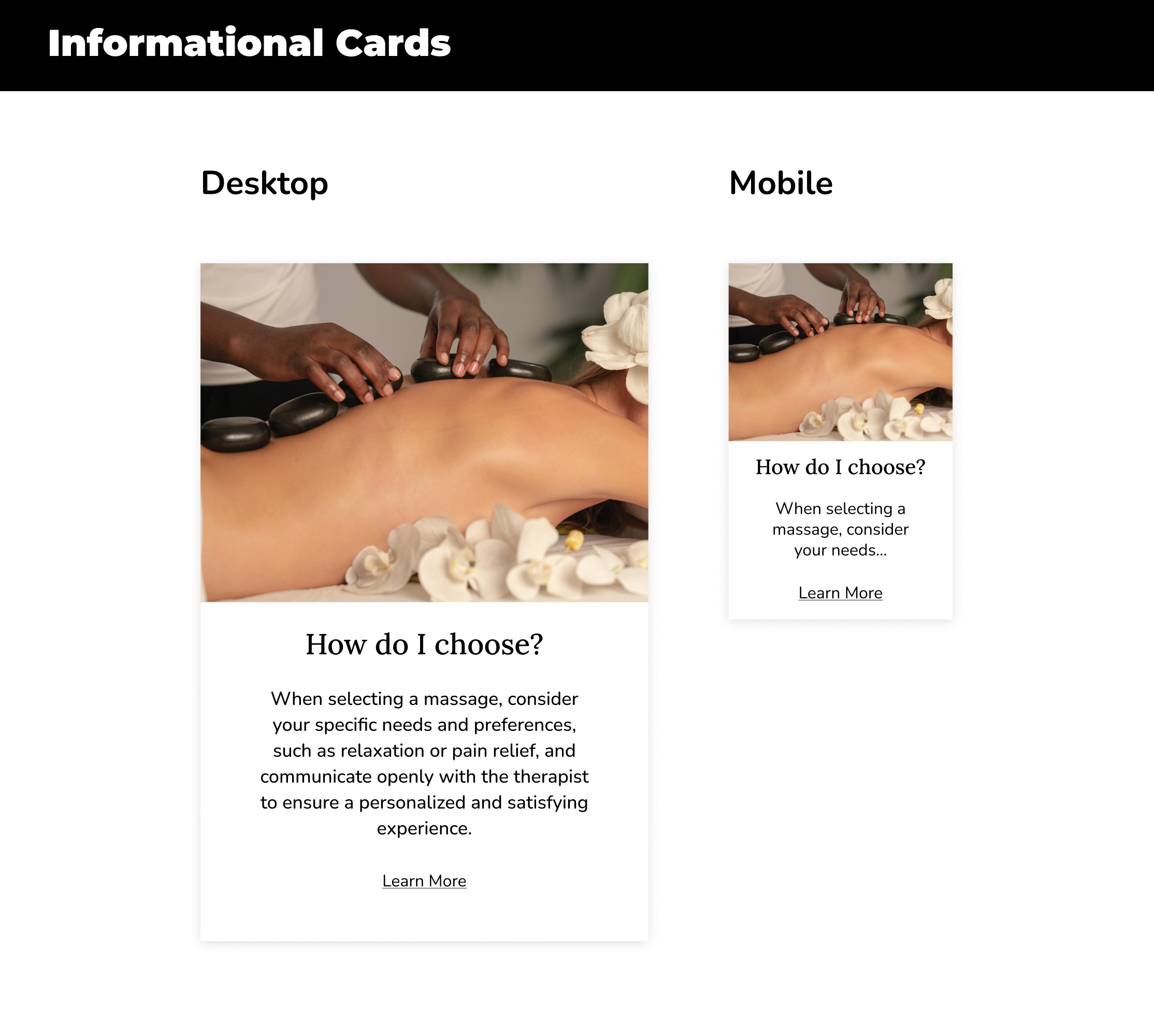
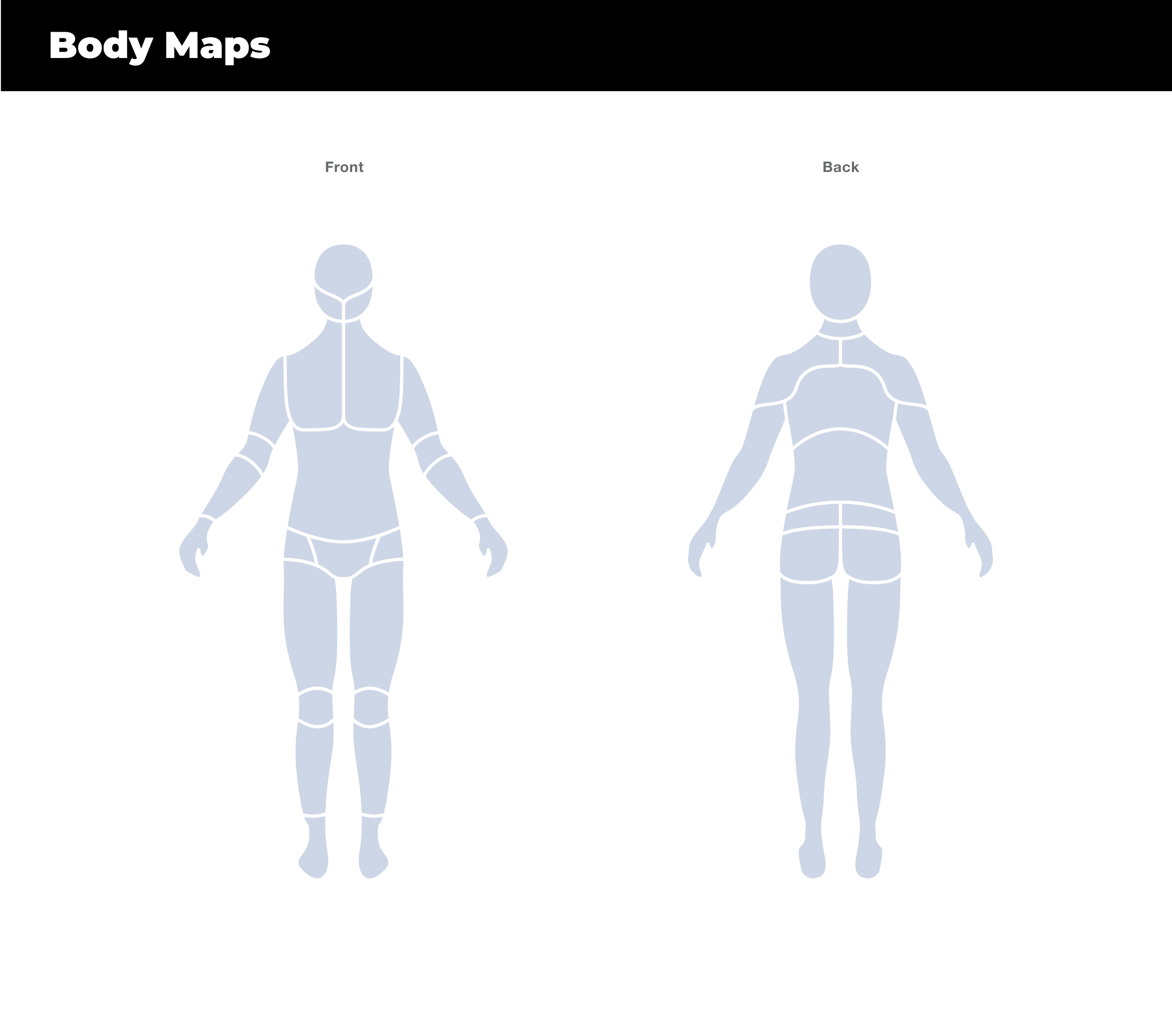
Once the branding was defined the next step was to create a component library that I could pull from to build my designs. My goal at this stage was to create a toolkit that I could use when designing that was flexible enough for further customization as well as structured enough to not require too much alteration to streamline the design process. I started with the basic components of the relevant CTAs and cards, followed by the body map and appointment calendar.
Crafting high-fidelity wireframes
After establishing a cohesive brand identity, I translated its elements into high-fidelity designs by incorporating the brand's color palette, typography, and visual elements. Leveraging the predetermined site structure as a guiding framework, I ensured a harmonious integration of the brand's aesthetic into every page, enhancing user experience and reinforcing brand consistency. The result is a visually captivating and functional website that not only reflects the essence of the brand but also provides a seamless and engaging journey for users.
Creating a foundational homepage and supporting content
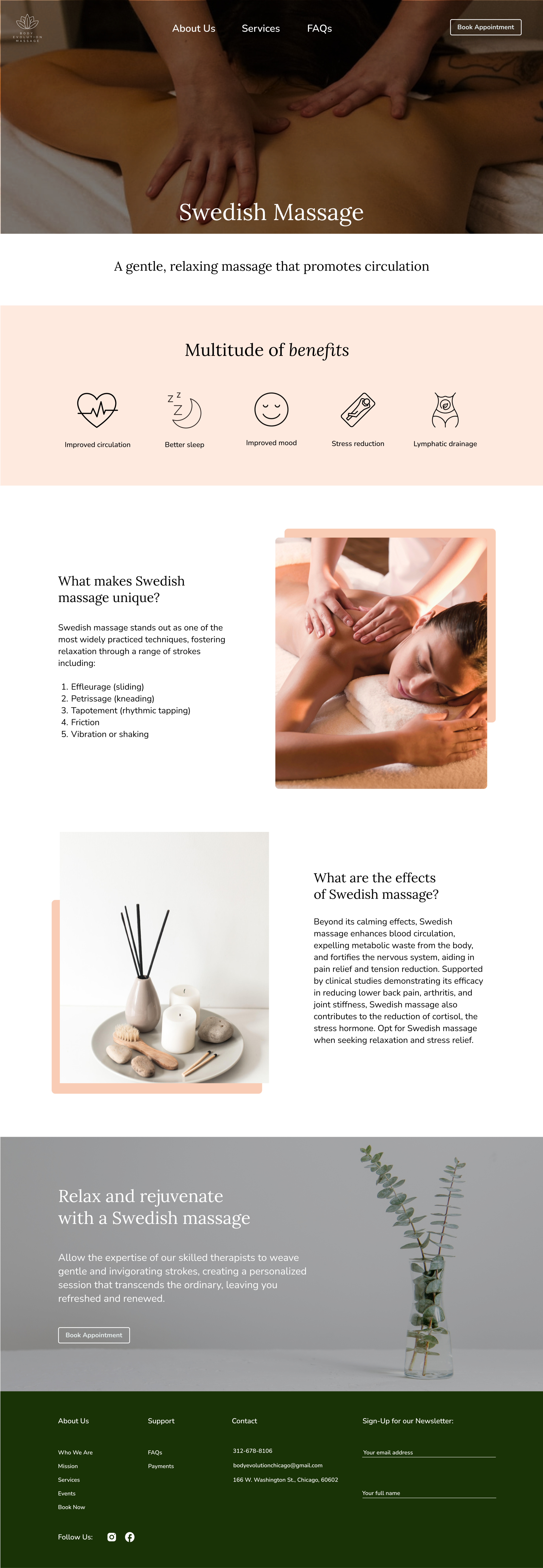
The homepage focuses on guiding users to essential information about various massage services. Engaging visuals and concise content on the informational pages empower users to make informed decisions based on specific therapy details and benefits. Overall, the design fosters transparency, ensuring users feel confident in selecting the most suitable massage therapy for their individual preferences and wellness goals.
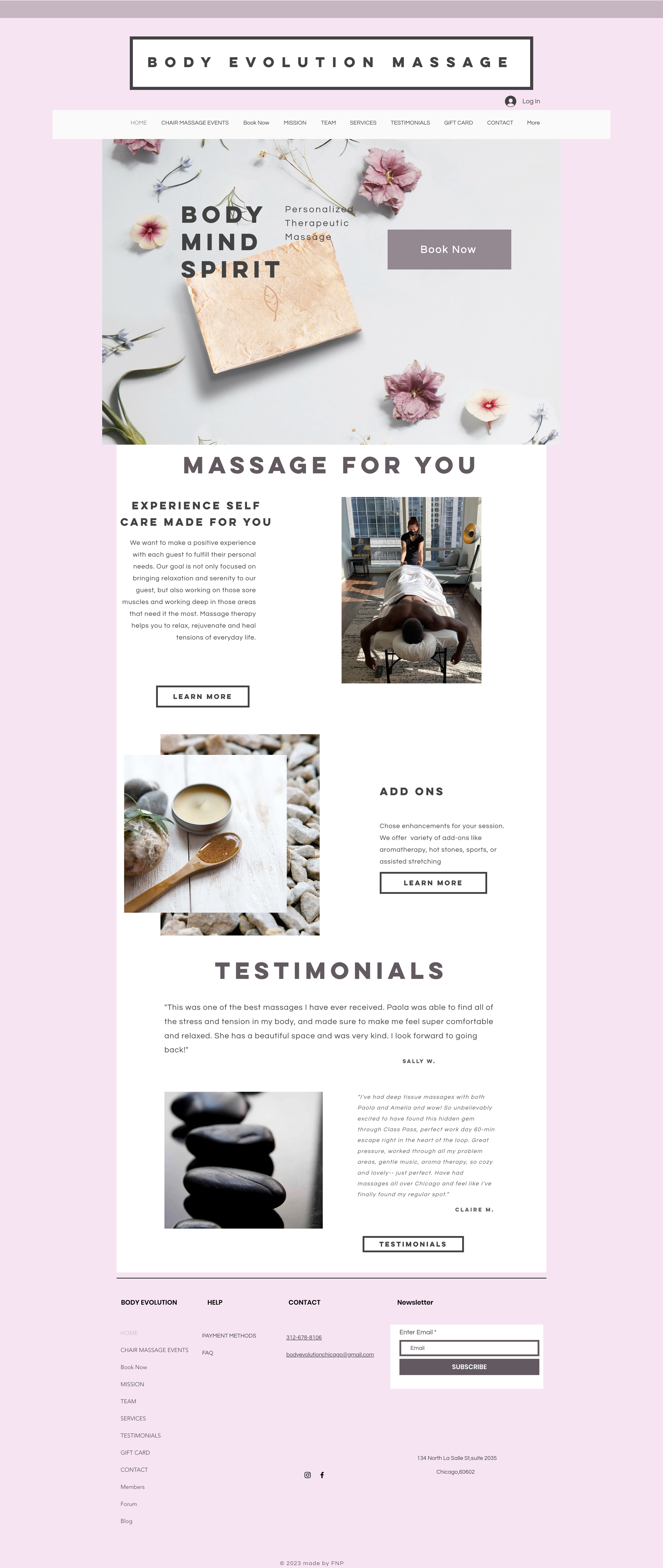
Original homepage
Redesigned homepage for desktop & mobile

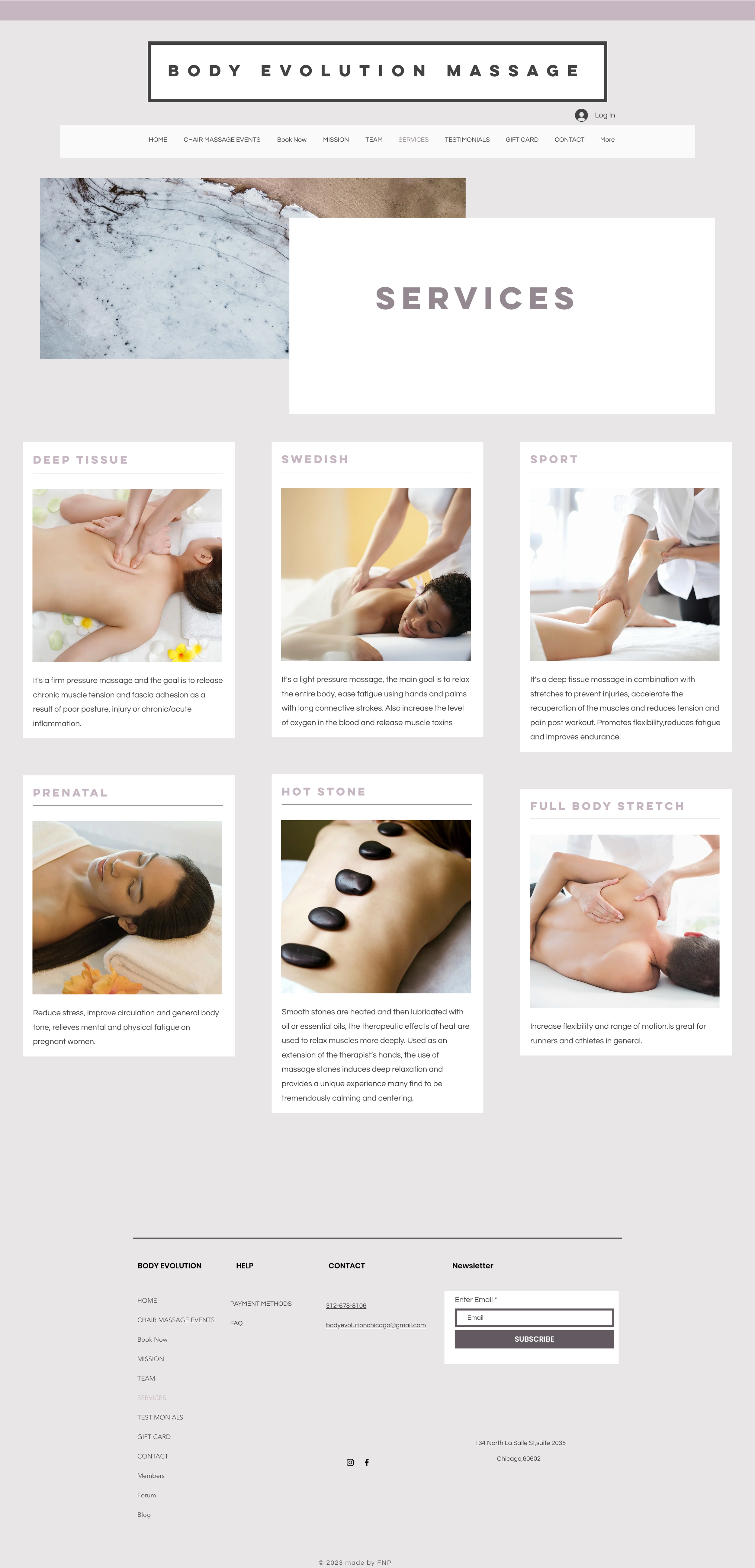
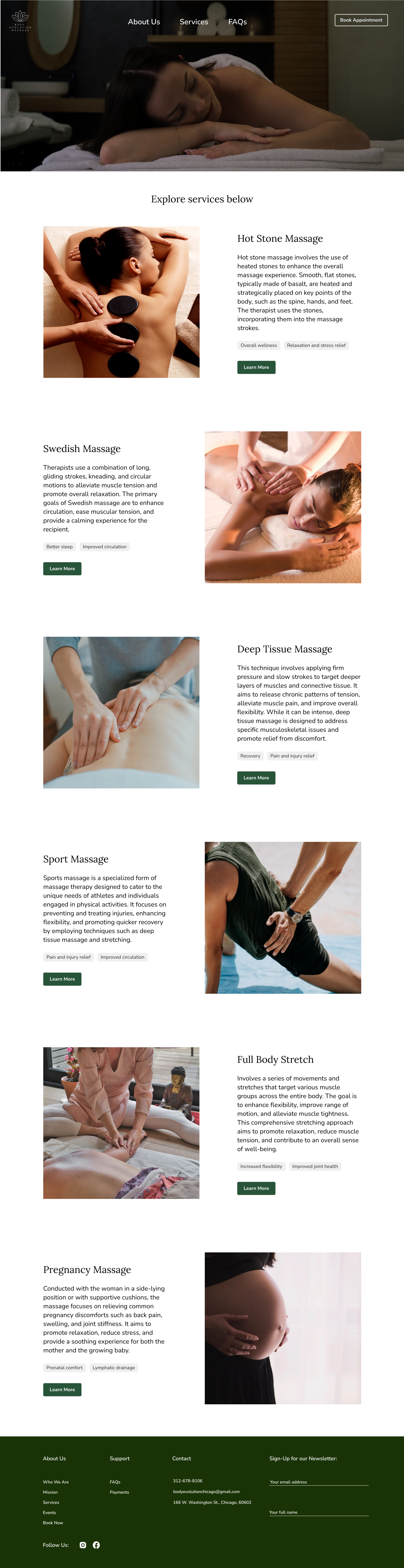
Revamped services page for desktop & mobile
Original services page

Added Swedish massage details page for desktop & mobile

Original booking flow
The current booking process has usability issues, such as compulsory account creation, a potentially misleading number of steps, and the requirement for full upfront payment. The insistence on account creation can act as a barrier, while the perceived complexity of the steps and the upfront payment demand may deter users. A more streamlined and flexible booking flow is recommended to enhance user experience and encourage increased engagement with the service.
The 3-step booking process is misleading
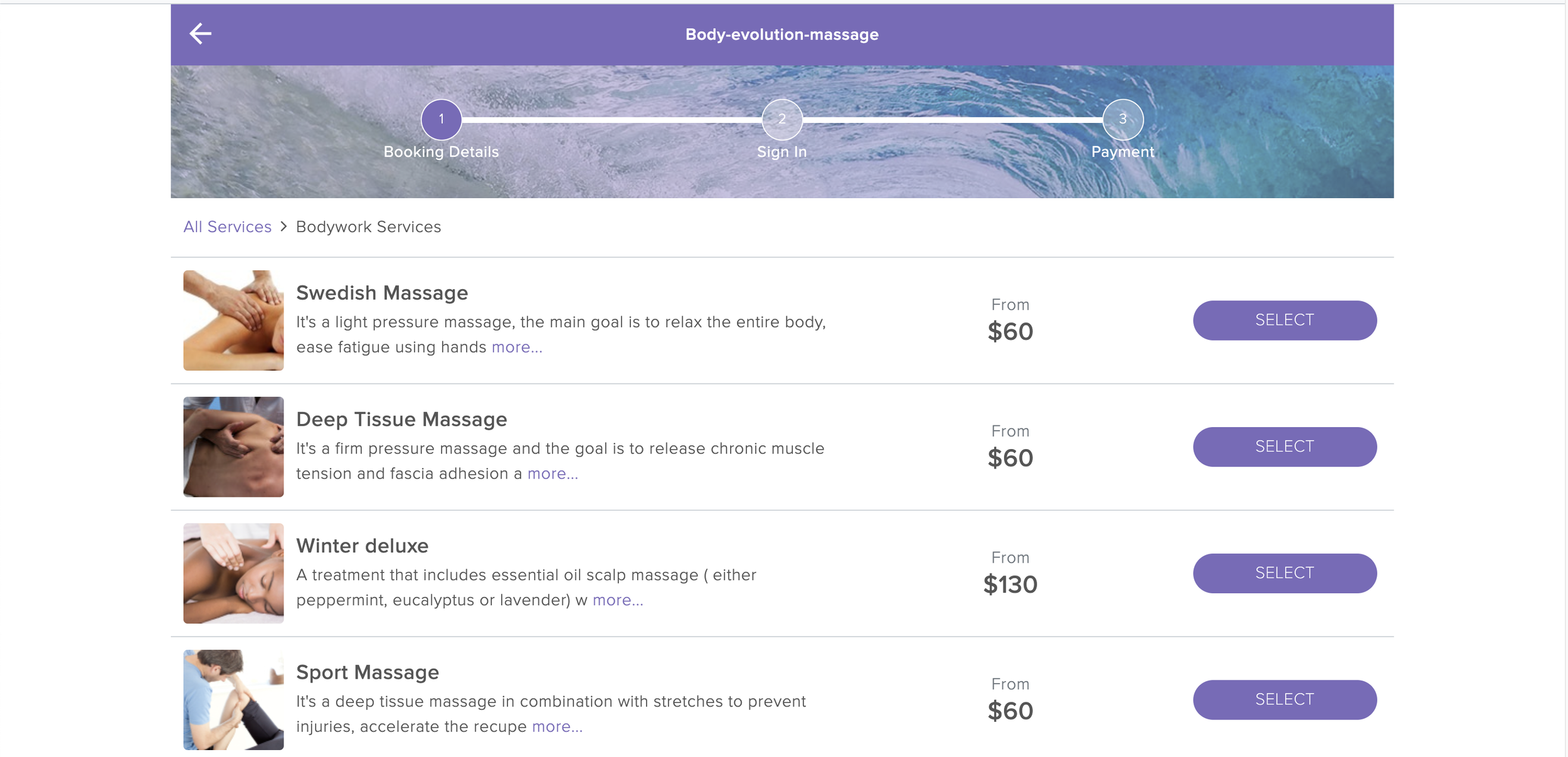
This is a second step but is still listed at “1” and you are taken to a different page out of the flow if you would like view details
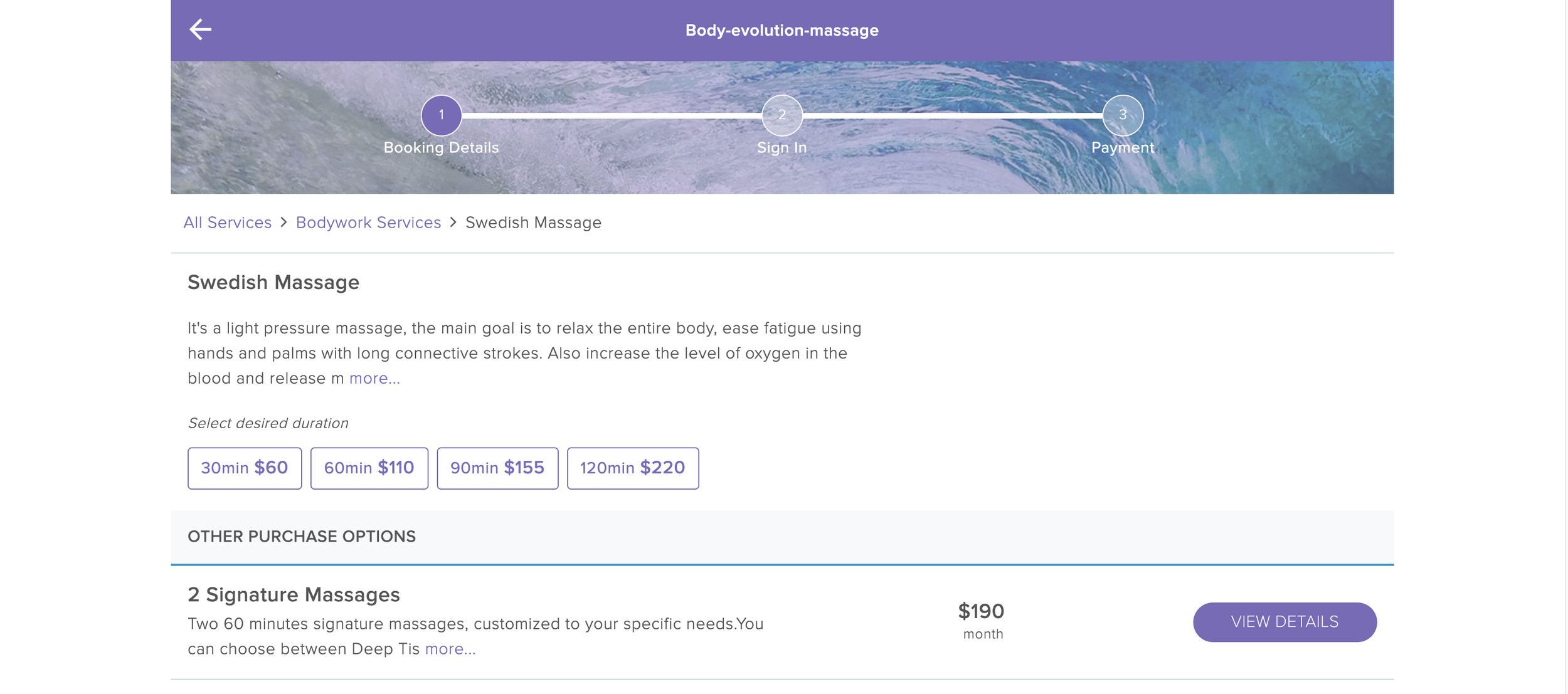
Provider information is limited and the month toggle is awkwardly placed and not intuitive
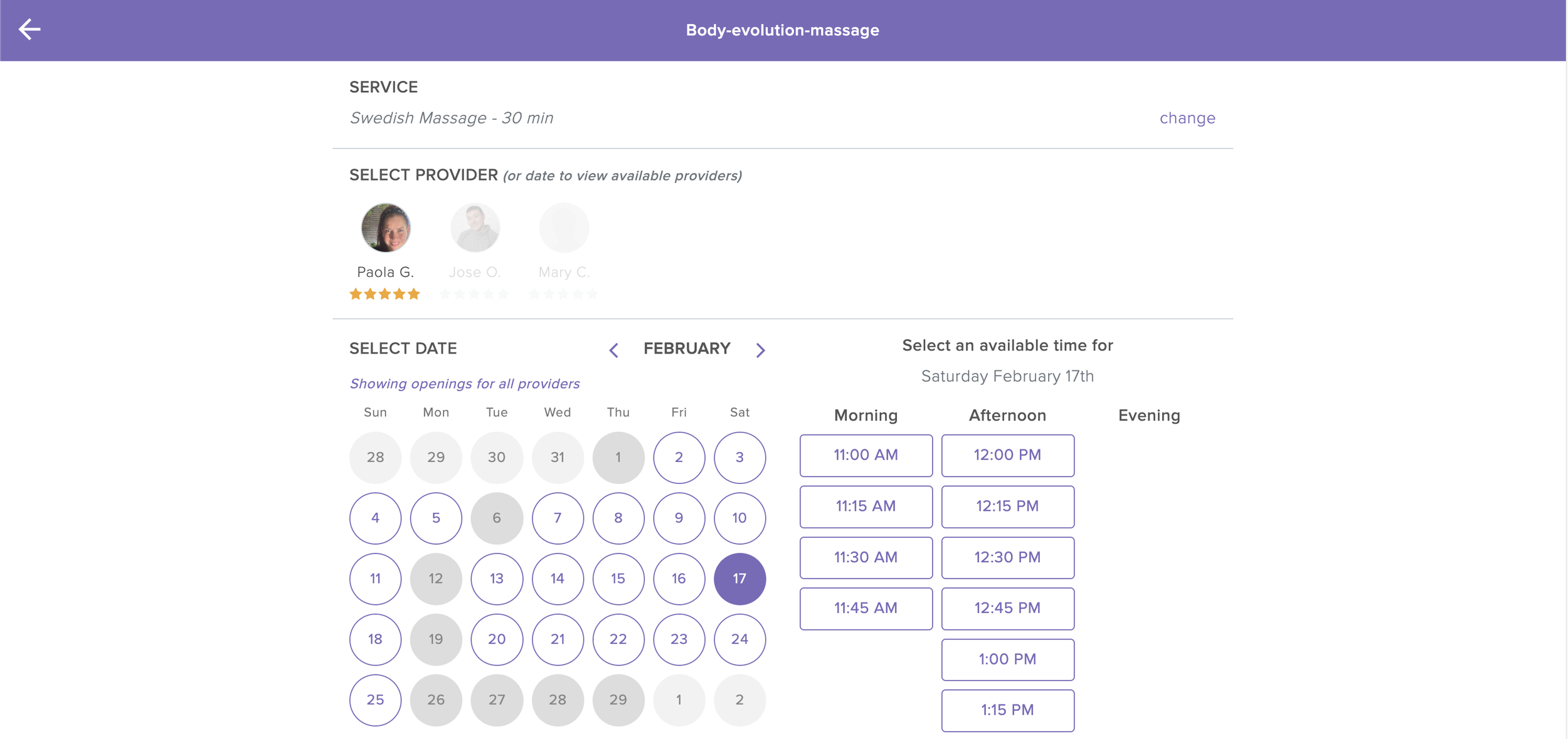
After deciding on the service, time, and provider, the user is forced to complete additional steps
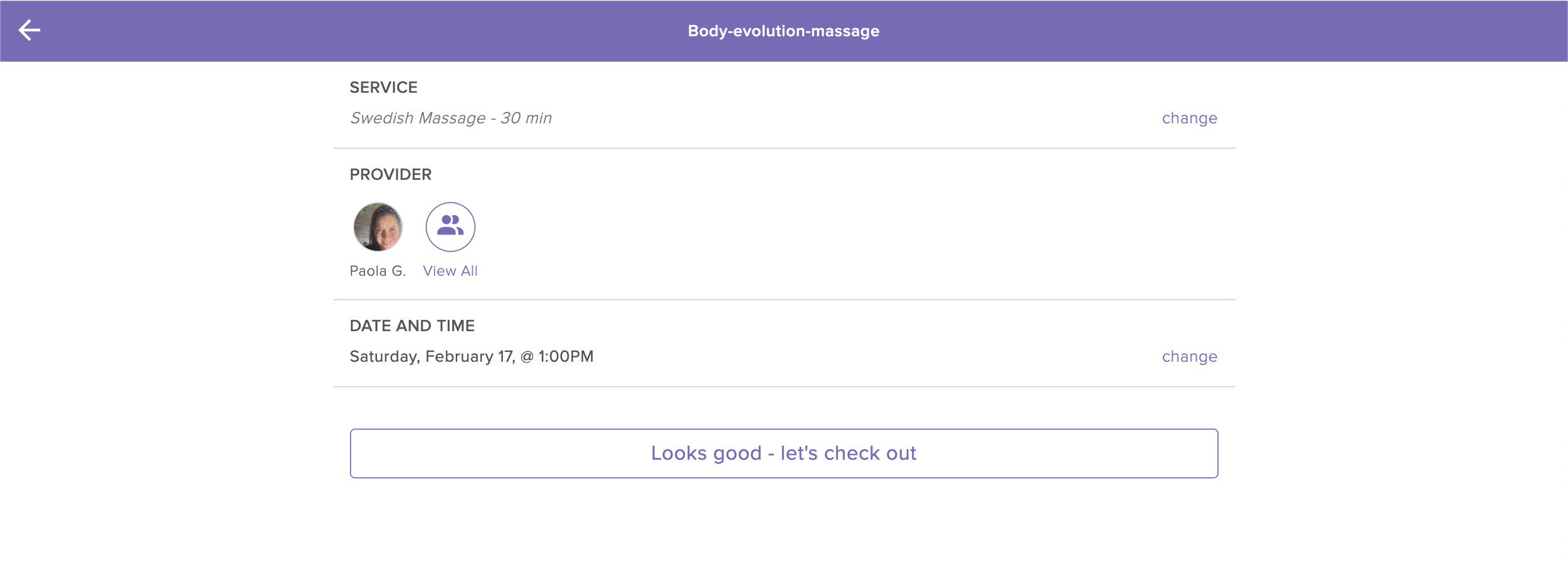
The user is forced to create an account in order to complete the booking which can act as a barrier

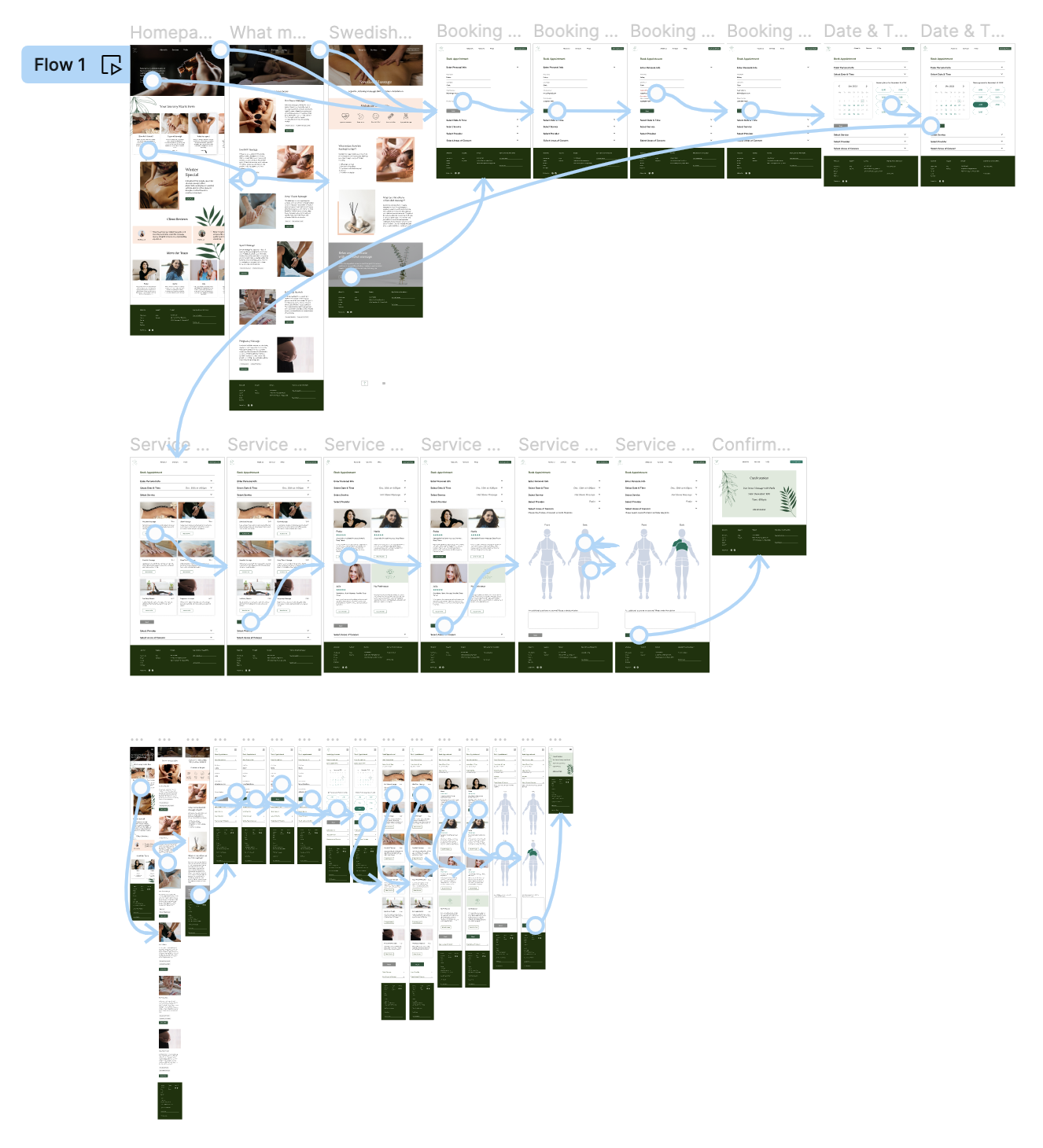
Structuring a booking flow:
Forming personal information input fields
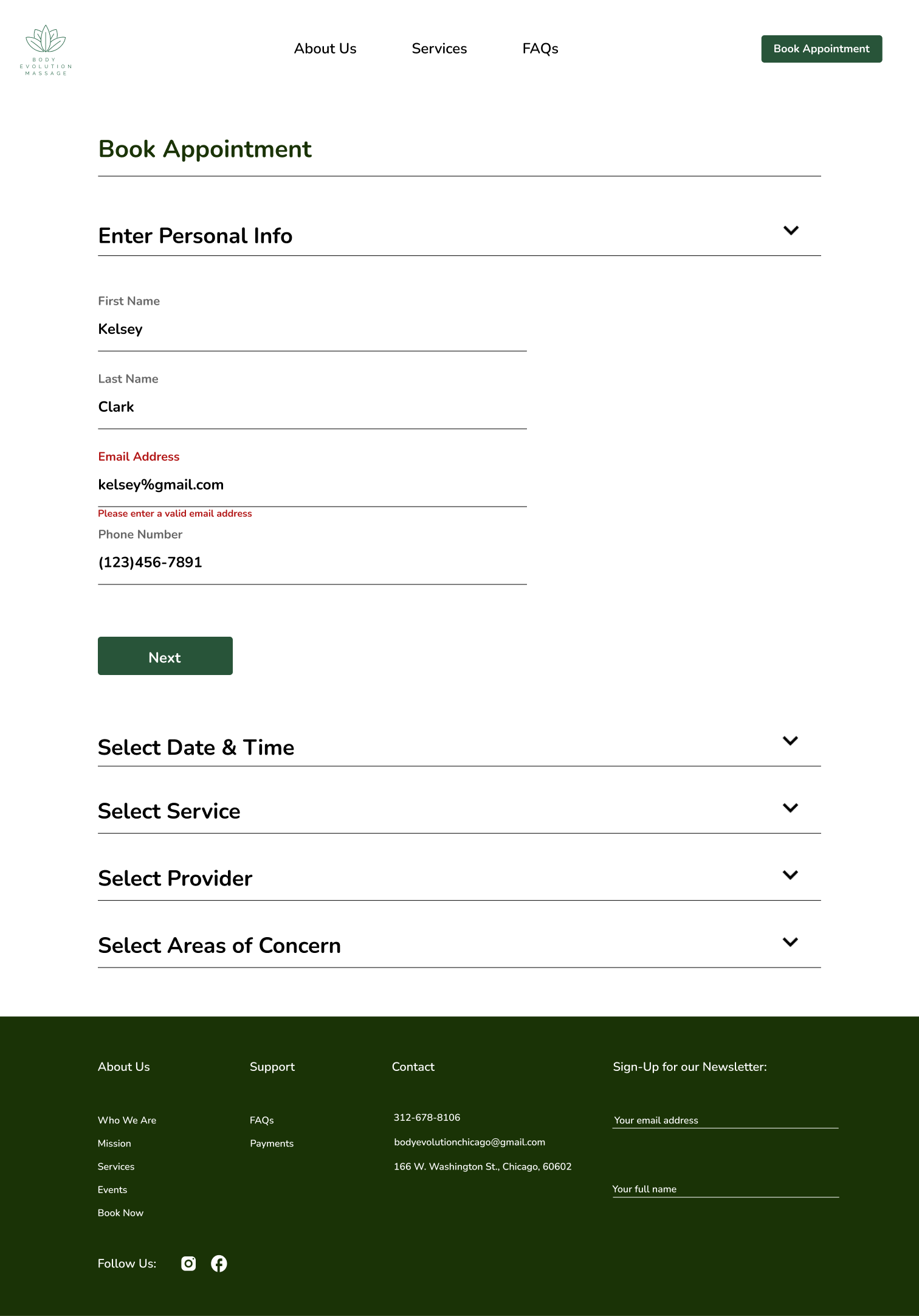
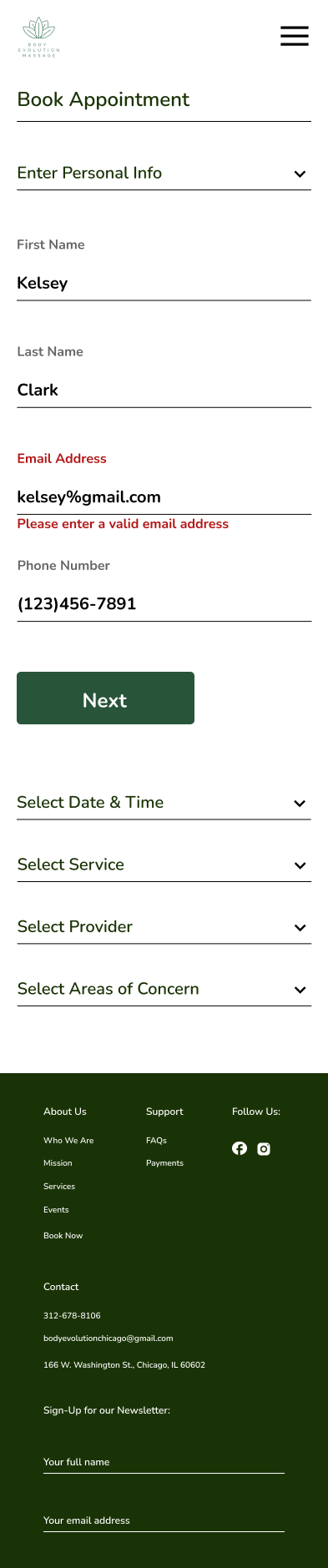
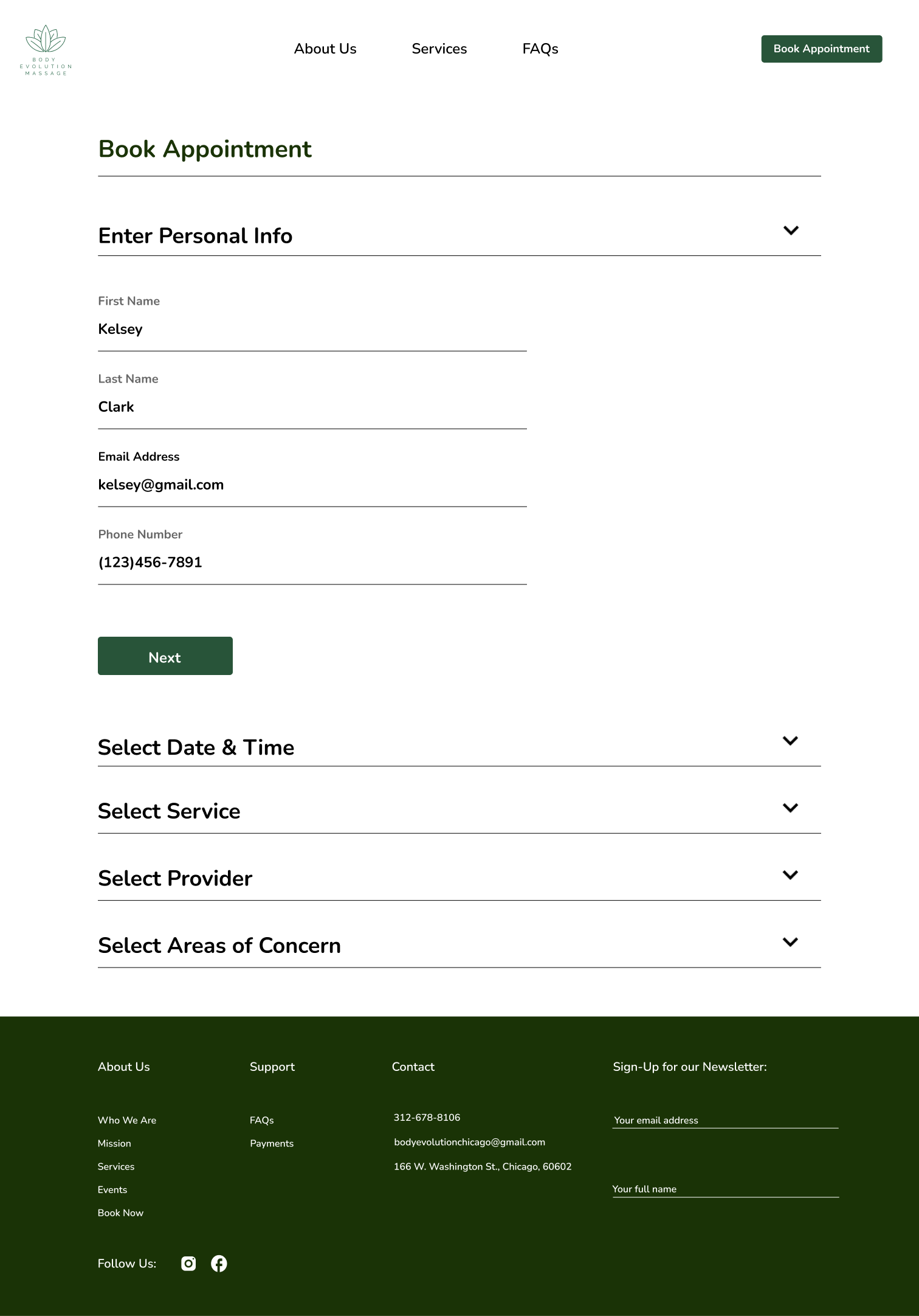
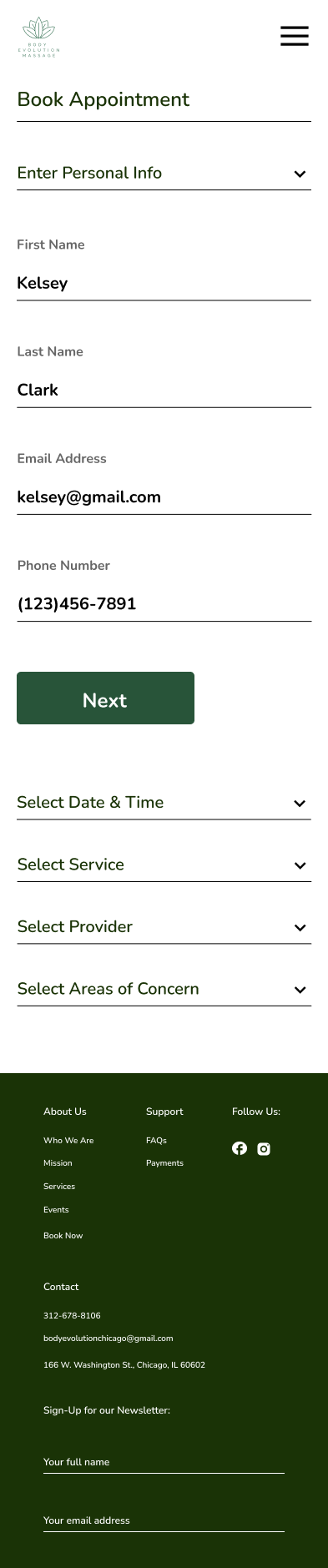
The input fields in the booking process serve as the primary means for users to provide essential information. My goal was to design a seamless and intuitive user experience by minimizing friction and reducing errors during data entry. Thoughtful placement and labeling of input fields enhance clarity, making it easier for users to understand what information is required. Additionally, input field validation and feedback contribute to an inclusive design. I wanted to make sure this section was well structured and not just a place to enter information but to guide the users to move forward in the booking process.
Incomplete input fields
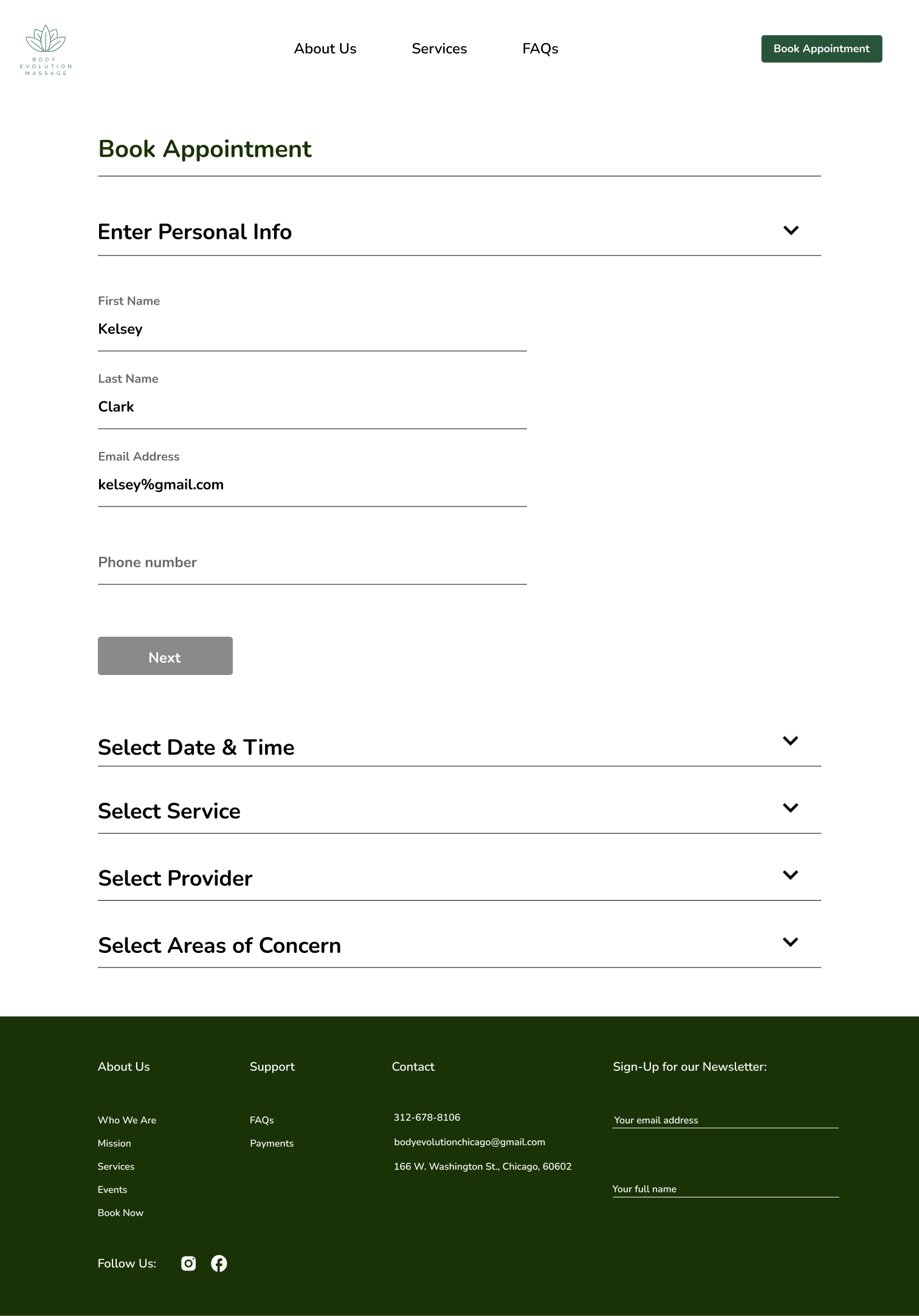
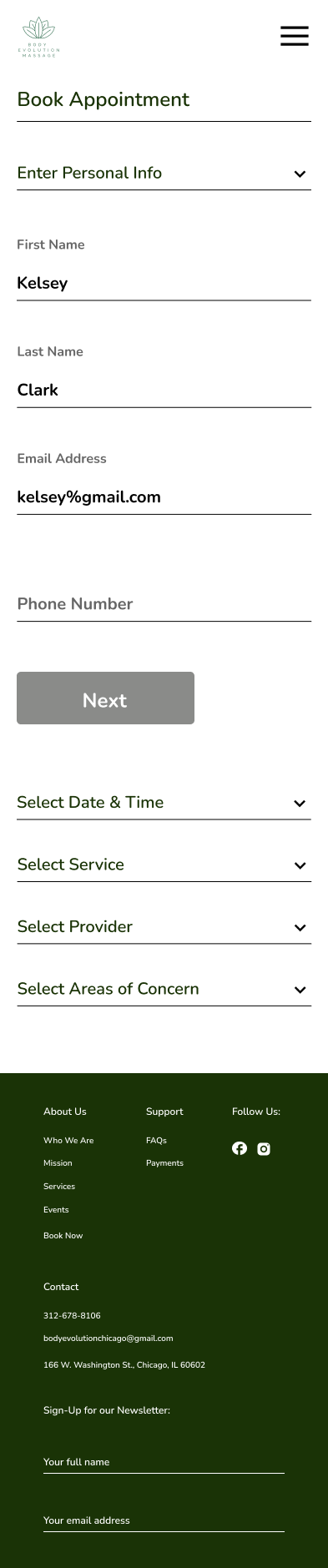
Completed, incorrect input fields
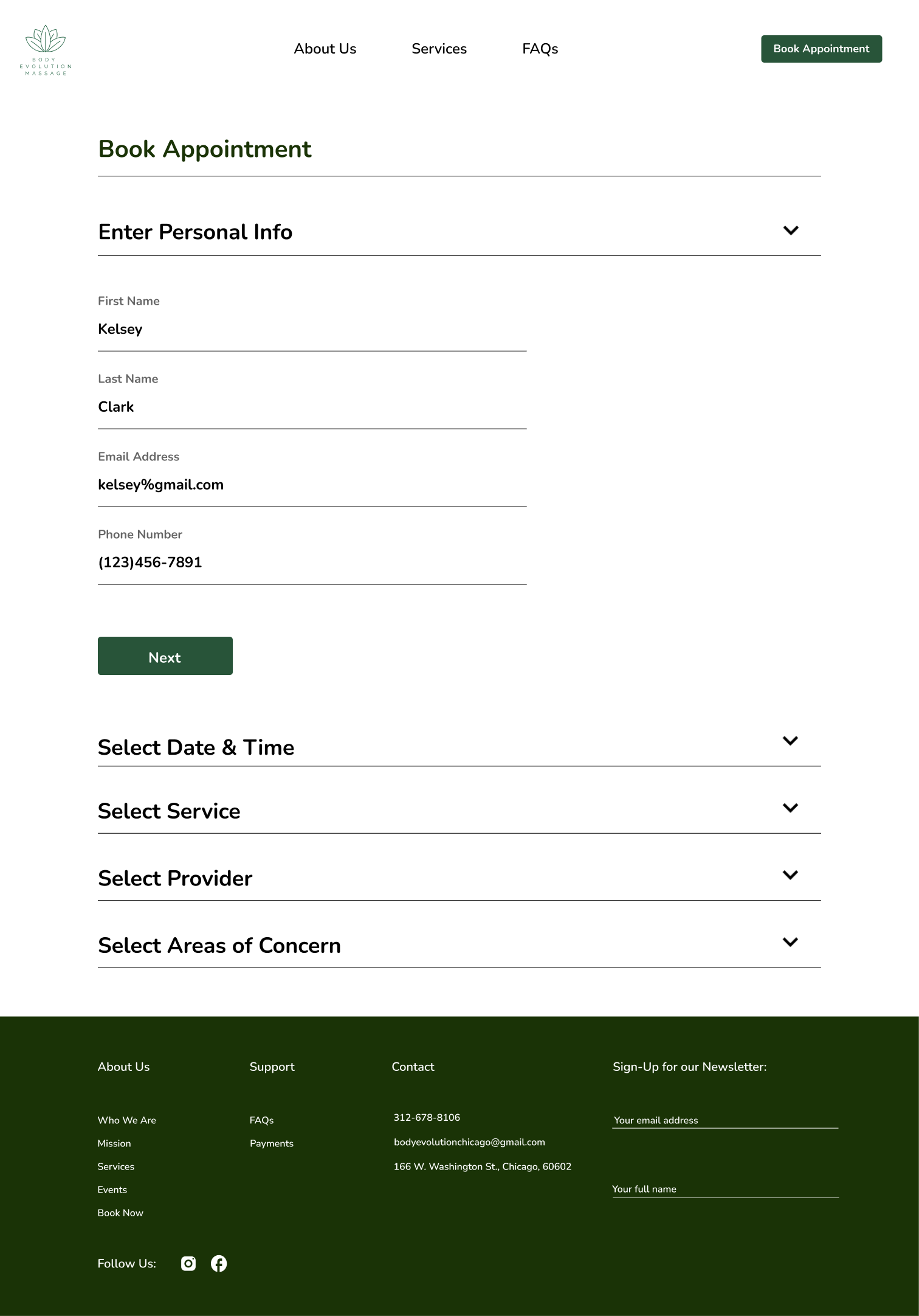
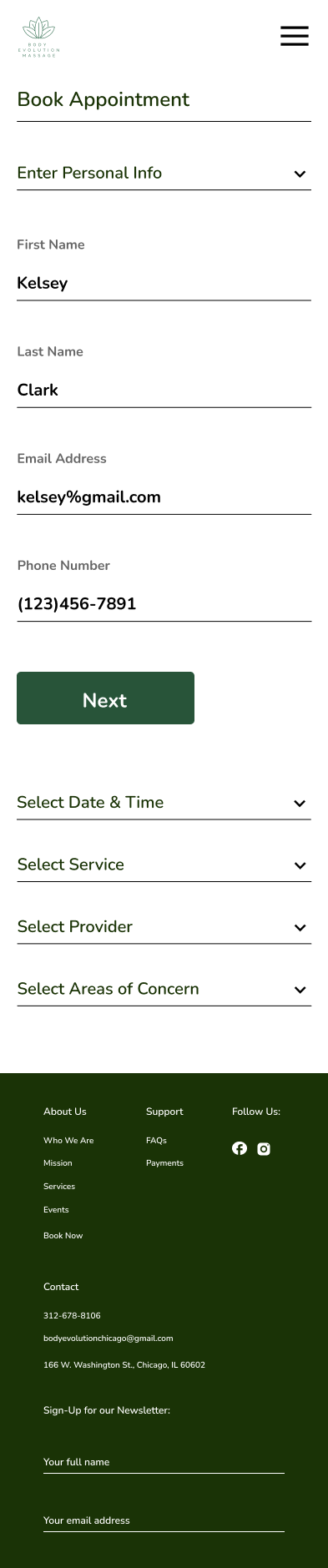
Completed, incorrect input fields with error message
Completed, correct input fields
Structuring a booking flow:
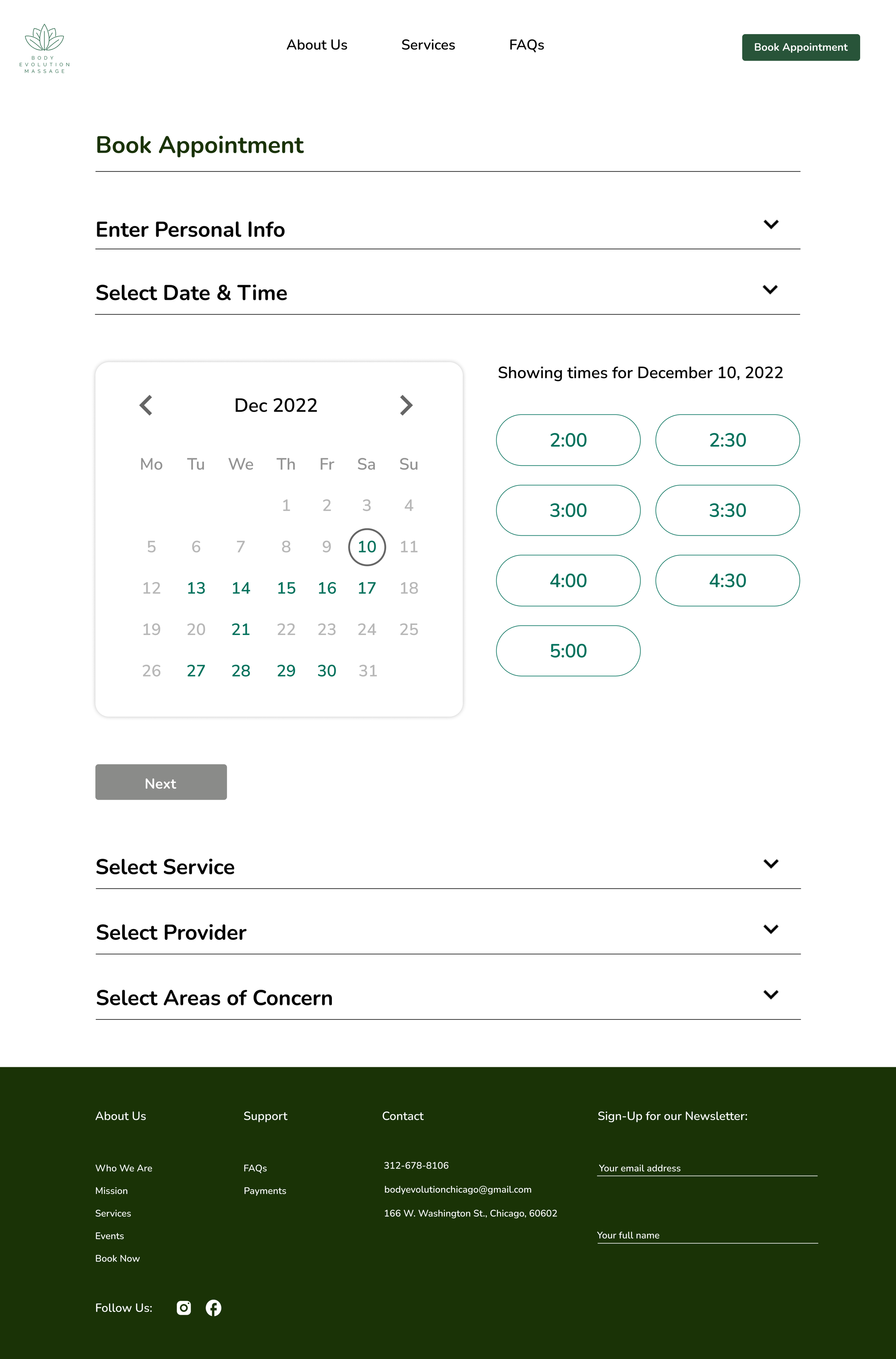
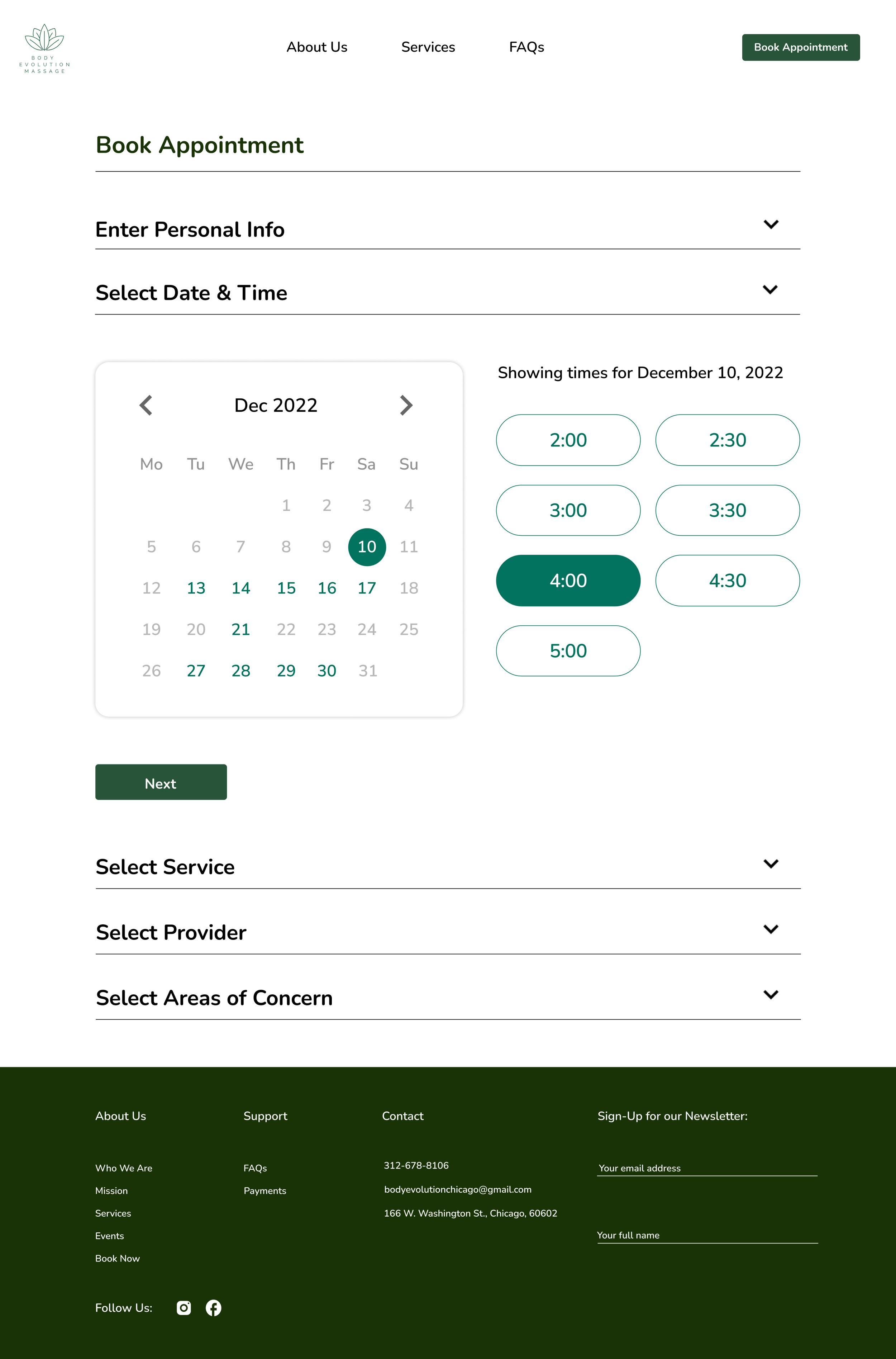
Crafting a date and time picker
The goal for the date and time calendar picker in my designs was to allow users to easily navigate and select available slots based on their preferences. This feature not only expedites the appointment-setting process but also minimizes the chances of double bookings or scheduling mishaps. With intuitive controls and clear visual cues, users can confidently and accurately secure their desired massage session.
Unselected Date & Time

Selected Date & Time

Structuring a booking flow:
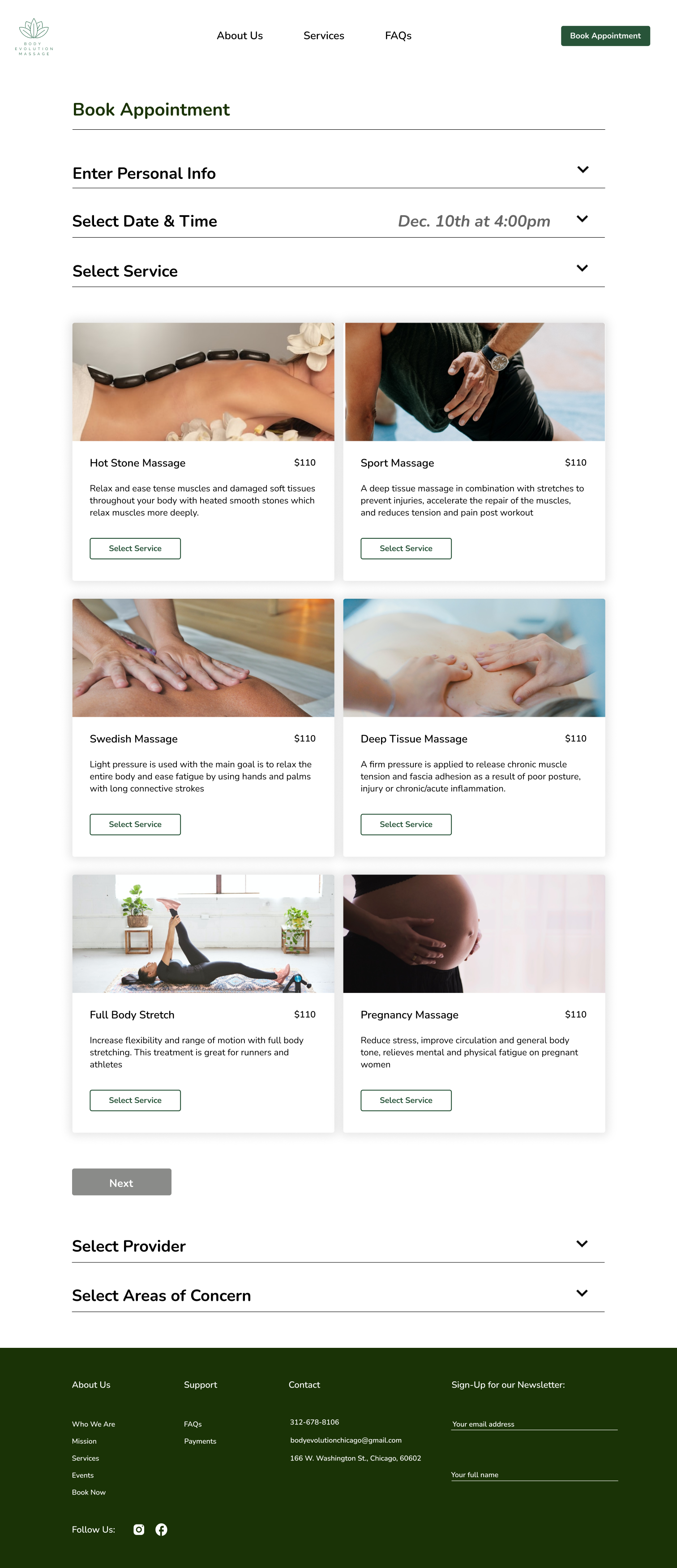
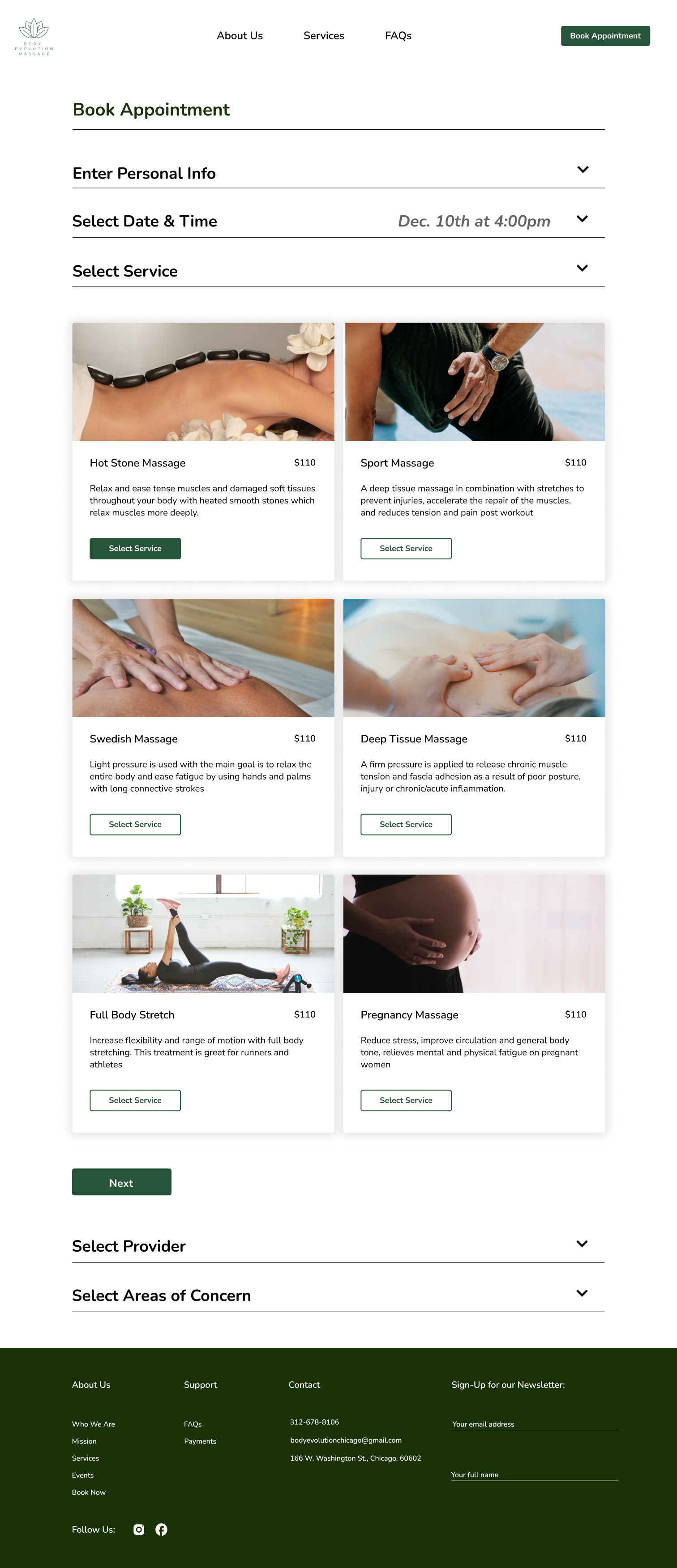
Showcasing the services provided by the business
I wanted users to efficiently choose the specific massage treatment that aligns with their needs and minimize the likelihood of selecting incompatible services. By providing clear descriptions, relevant visuals, and easy navigation, the platform ensures users can effortlessly pick the right service, facilitating a smooth booking experience.
Unselected Service

Selected Service

Structuring a booking flow:
Highlighting the massage therapists
Efficient provider selection is key for a massage booking platform, allowing users to quickly choose their preferred therapist. This feature streamlines the process, minimizing mismatches and enhancing user confidence through comprehensive profiles, ratings, and specialties, ensuring a booking experience that leaves the user confident in their decision.
Unselected Provider
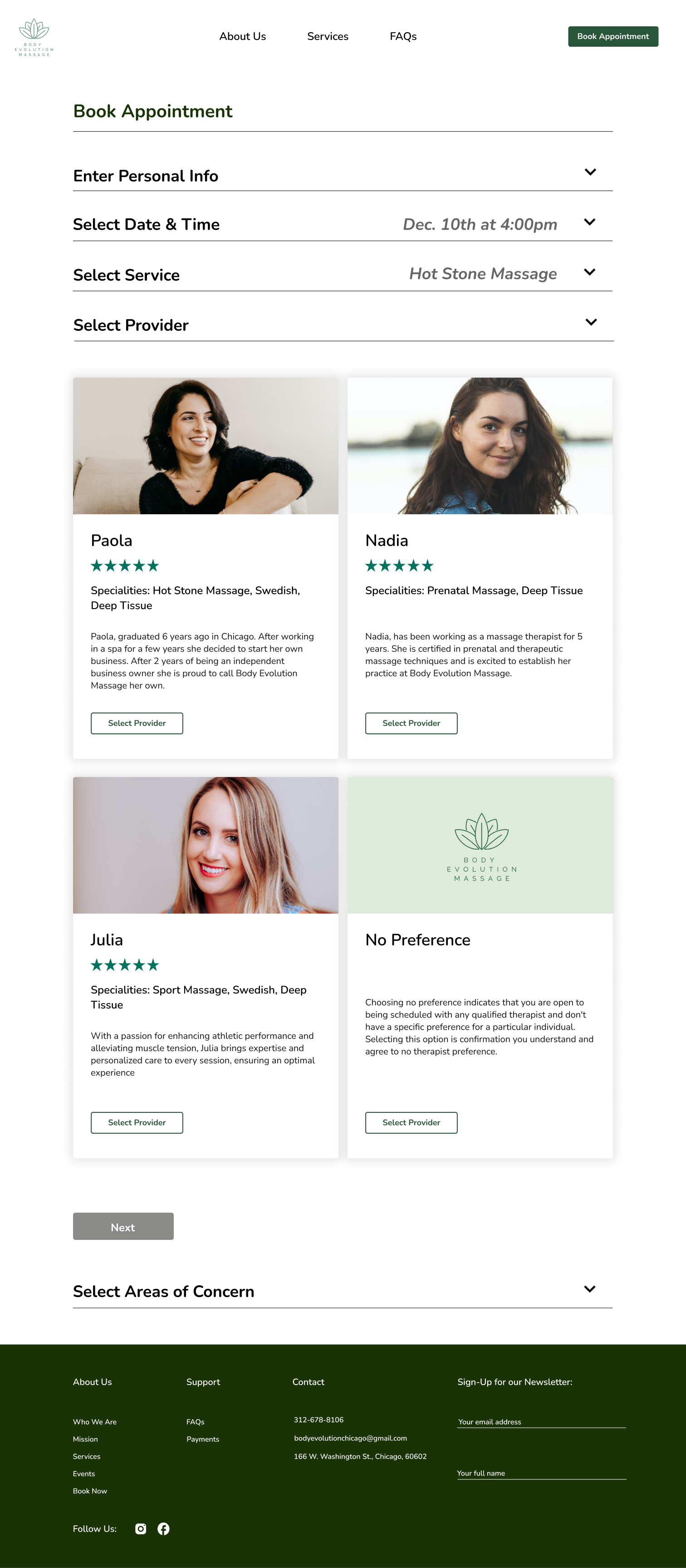

Selected Provider
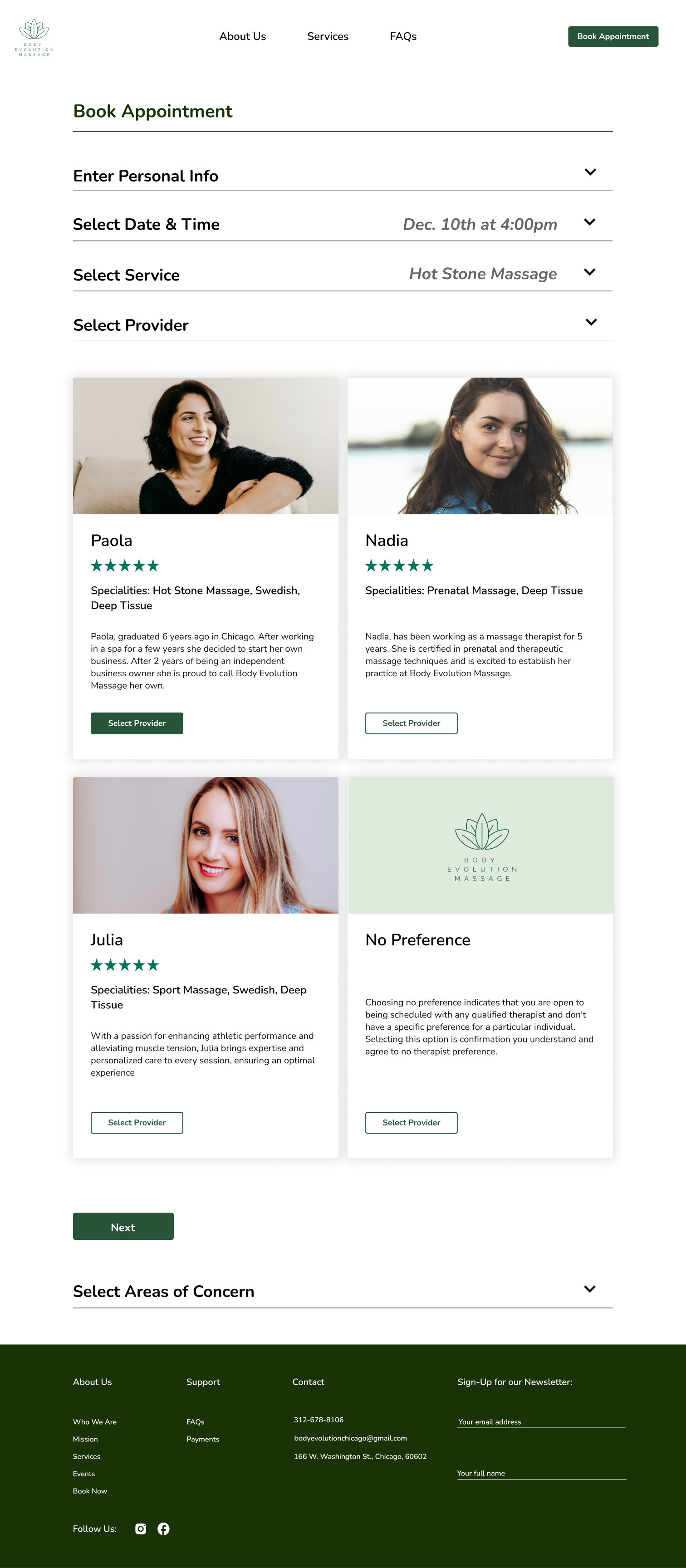

Structuring a booking flow:
Creating a body map to select areas of concern
The ability to select areas of concern in a booking flow is essential as it personalizes the user experience, allowing individuals to tailor their massage session to specific needs or discomfort. This feature ensures that users receive targeted and effective treatments, enhancing the overall satisfaction and effectiveness of the massage service. By enabling users to communicate their areas of concern upfront, the booking platform fosters a more personalized and client-centric approach to wellness.
Unselected Areas of Concern
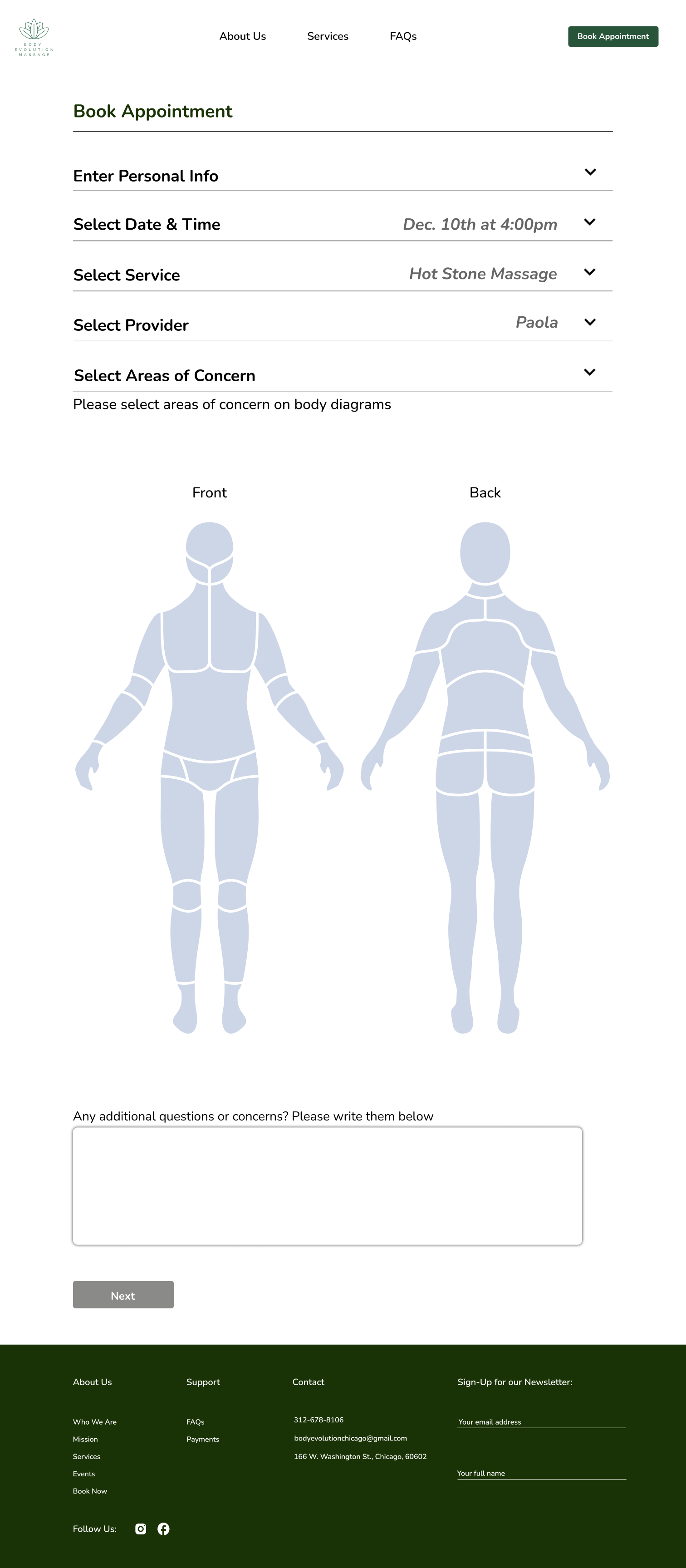

Selected Areas of Concern
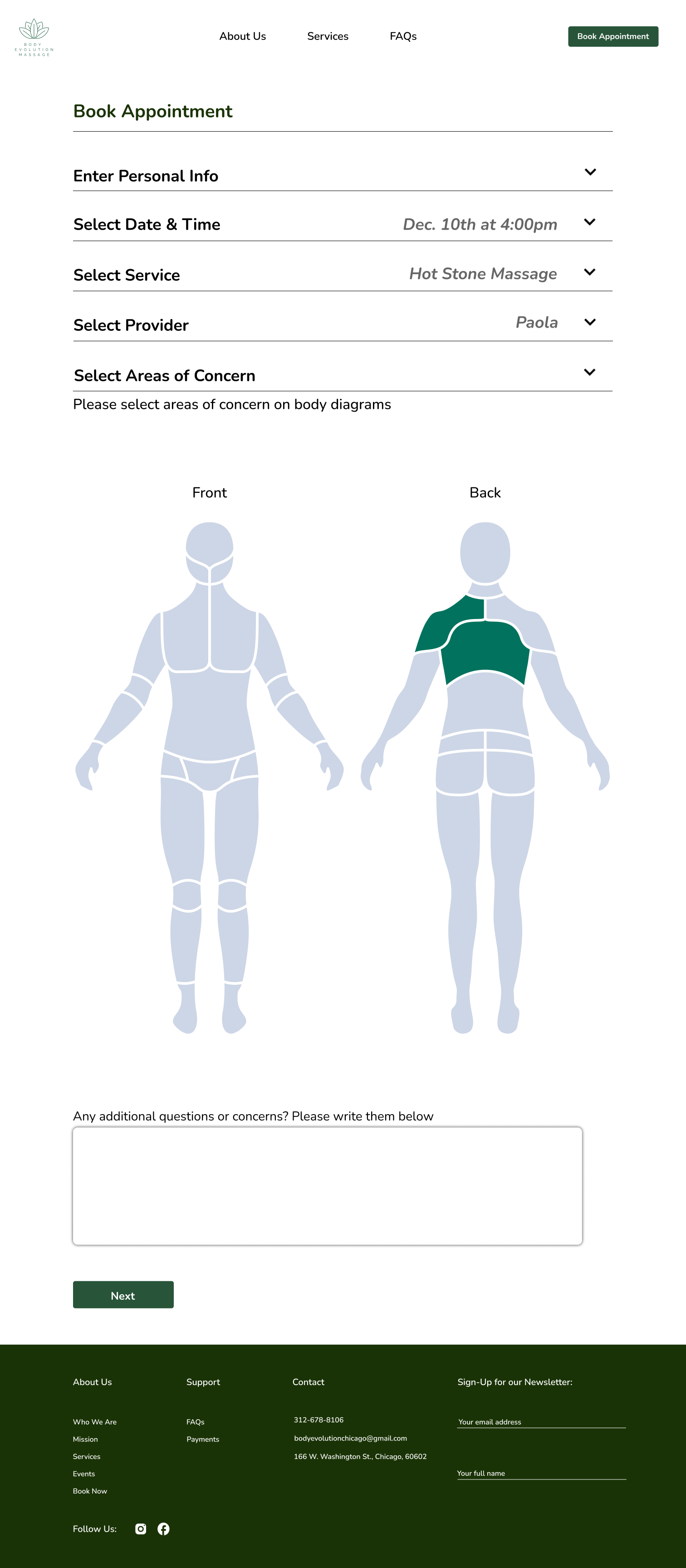

Conducting usability testing
I conducted a usability test with individuals who have a history of booking massage appointments on a semi-annual basis for the past 2-3 years. My objective was to observe their interaction with the massage appointment booking process, identify the intuitive elements, pinpoint any less clear aspects, and suggest enhancements for the overall design.
Key takeaways from user feedback
Omitting mandatory account creation or instant financial commitment in the booking flow boosts user engagement and booking completion rates
Some users suggested avenues for streamlining and enhancing efficiency as existing customers
Incorporating user-friendly comparison features would further aid users in making an informed decision
Users appreciate the ability to explore the booking flow without being required to create an account or make a financial commitment immediately. Implementing a guest checkout option or delayed account creation feature allows users to familiarize themselves with the service before making a commitment, fostering a sense of flexibility and reducing potential barriers to entry.
Some users suggest that while the new booking flow is an improvement, there's room to further streamline the process. Considerations include implementing quick access to previously booked services to make the experience more efficient and user-friendly.
Feedback suggests a desire for features that facilitate easy comparison between different massage services. Implementing a user-friendly comparison tool or matrix that highlights key elements such as duration, techniques, and benefits could assist users in quickly evaluating and selecting the massage that aligns best with their preferences.
Business implications of a streamlined booking flow
Increased Booking Conversions
Enhanced Customer Satisfaction and Loyalty
Operational Efficiency and Resource Optimization
A streamlined booking flow can lead to higher conversion rates as it reduces friction in the booking process. With fewer obstacles and a more straightforward user experience, potential clients are more likely to complete the booking, resulting in increased revenue for the business.
Simplifying the booking process contributes to a positive customer experience. Clients appreciate a hassle-free and efficient journey from selecting a service to confirming an appointment. This positive experience can lead to increased customer satisfaction and loyalty, encouraging repeat business and positive word-of-mouth referrals.
Streamlining the booking flow not only benefits customers but also enhances operational efficiency for the small business. With a more efficient process, staff can manage appointments more effectively, reducing the likelihood of scheduling conflicts and minimizing the time required for administrative tasks. This, in turn, optimizes resource allocation and contributes to the overall effectiveness of the business operations.